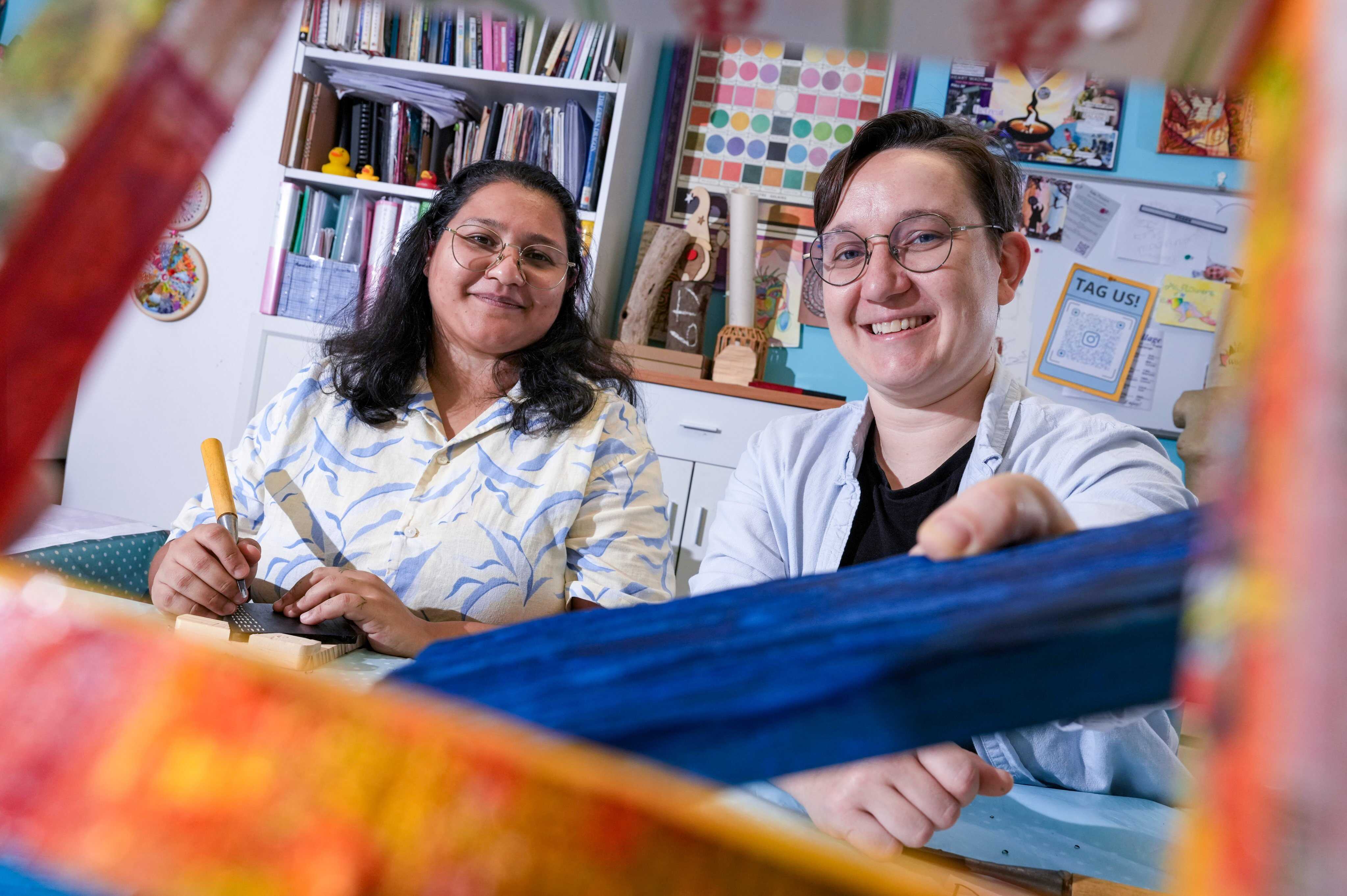
Artisans carefully measured a wooden plank before methodically chiselling the surface with blades to shape the piece.
This is a type of woodworking found at A Collective Space, founded by Emmy Sandt and Sne Roy. The subtractive process involves some intention, as the delicate taking away of wood means there is little chance of “undoing” any mistakes.
The design and wellness collective had its own intention: to be a place where mindfulness and healing met creativity and crafts.
For Sandt and Roy, woodworking is more than a homeware-making art; it is also a process that allows one to embrace their missteps and blunders.
“In woodworking, some mistakes are irreversible. You can only start again,” said Roy, the director of programmes.
“And that is the very definition of resilience, right? You keep going … It’s OK to start over from scratch. It doesn’t mean I wasted my effort; it means I perfected my skill.”
A deeply therapeutic craft
Roy, 35, and Sandt, 33, officially launched the collective in 2023, carving out a community through tailor-made workshops and collaborations with NGOs.
It is all done with the intention of building connection and supporting well-being.
Sandt, the head carpenter, was born and raised in Hong Kong to Finnish parents. She then moved to Australia at 18 and spent six years building wooden theatre sets.
The temporary nature of the work came to frustrate her.
“I felt quite disheartened by the way you would build something and then you would throw it away at the end of the show,” Sandt said. “I wanted to have a bit more permanence in the stuff that we did.”
Sandt began to shift her focus to furniture. When she returned to Hong Kong, woodworking helped her through a tumultuous time between 2019 and 2021.
“I found woodworking deeply therapeutic,” Sandt said. “It was really my way to ground myself and to feel less dislocated from the world.”
Her partner Roy is originally from Kolkata in West Bengal, India. She moved to Hong Kong as a child and later worked in education and counselling.
Sandt introduced Roy to woodworking shortly after the pair met in 2017. They fondly recalled building Ikea furniture together and even making home furnishings by upcycling discarded items.
During the Covid-19 pandemic, Roy helped Sandt with different carpentry projects.
Like Sandt, Roy also found the process healing: “I soon realised that it was immensely therapeutic for me to do something so technical and [also] repetitive.”
And behind the wood grain, their relationship was changing. In the process of physically building something together, the pair were also getting closer.
“We got to know each other at a different level,” Roy explained.
The women also realised woodworking’s potential to offer others a respite from the city’s stressful, fast pace.
“In Hong Kong, we are not a very patient bunch. We are built for speed and efficiency,” Roy said. “[But woodworking could be] a pleasant surprise … It can take you days and weeks, sometimes months and years, to fulfil a project from start to finish.”
Women who woodwork
Sandt’s carpentry journey was influenced by her father, who enjoyed fixing and building things himself: “In my head, if you want to make something, it is possible to do it. You just need to put your head down.”
But becoming a female carpenter in Hong Kong was not so simple. In Finland, Sandt said, it was no big deal to find women in male-dominated spaces and roles. In Hong Kong, there were “clear gender norms” in certain industries, she said.
“It was definitely a challenge … Many, many times, I have faced ‘Where’s your boyfriend?’, ‘Where’s your husband?’, ‘There’s no way that you are doing this.’”
After years of experience – and without having to seek out or feel the need for a man’s help with her work – Sandt is solid in her career. Today, she runs her own furniture-making company, independent of the collective.
“One thing that I always kind of harp on about is that women can do physical things,” Sandt said.
And challenging gender stereotypes goes beyond carpentry for the collective’s founders. It also extends to women taking on roles traditionally filled by men.
“Women’s leadership is sometimes considered to be more gentle and kind,” Roy explained. “Of course, we should be kind, but you … can be confident and forceful and that’s OK. That doesn’t make you aggressive. It just makes you passionate.”
Making room for connection and exploration
Every month, A Collective Space, stylised in all lower case, organises two sessions of “Crafts & Yaps”, informal hour-long gatherings of about 10 people.
The group chit-chats while working on a “mystery craft”, which is only revealed upon arrival. They work with their hands while Roy guides the conversation with questions designed to help them open up.
Roy and Sandt came up with the idea last year after they found that many young people were hesitant to join traditional, formal events because of “performance anxiety”.
“A lot of people said they would like to come but were too afraid to attend a public workshop,” Roy said.
The solution was to eliminate the need to be perfect. The pair envisioned a gathering where participants needed zero woodworking experience.
“You’re gonna fail. It’s gonna be ugly, and that’s OK,” Roy explained.
“When you are engaged in something else where you don’t feel the need to have intense eye contact with someone, you’re actually able to open up in a much deeper, meaningful way,” Sandt added.
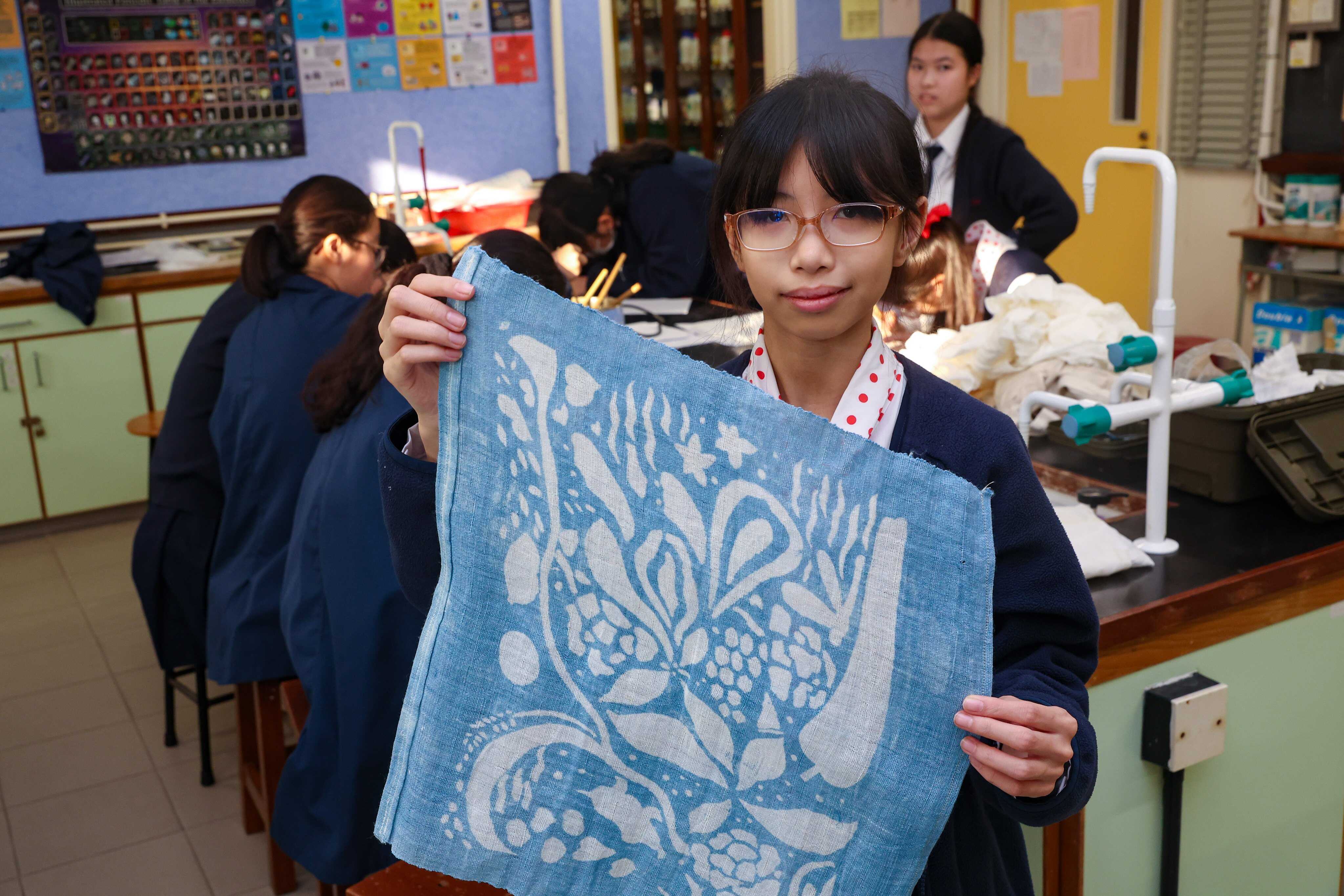
In addition to the regular crafting and conversation sessions, the pair organise and host programmes at Hong Kong schools and universities that are tailored to desired learning outcomes. Roy said these workshops in particular showed her why their approach was important for young people today.
Crafts & Yaps participants have told the pair about staying connected with others from their session; some even regularly met up for board game nights and dinners.
Sandt said she hoped they were able to think back on the “one tiny little thing” they had made in the workshop, and the “peace and serenity” it may have brought them.
“I can’t change society. I can’t change the pressure … but I can give you a space where you can laugh and just have fun,” Roy said. “I hope that they feel seen and heard while they are here.”