Have something to say? Send us a letter using this form.
Restoring coral reefs in the Koh Rong archipelago, Cambodia
Hayley Hope Tang, St Paul’s School (New Hampshire, United States)
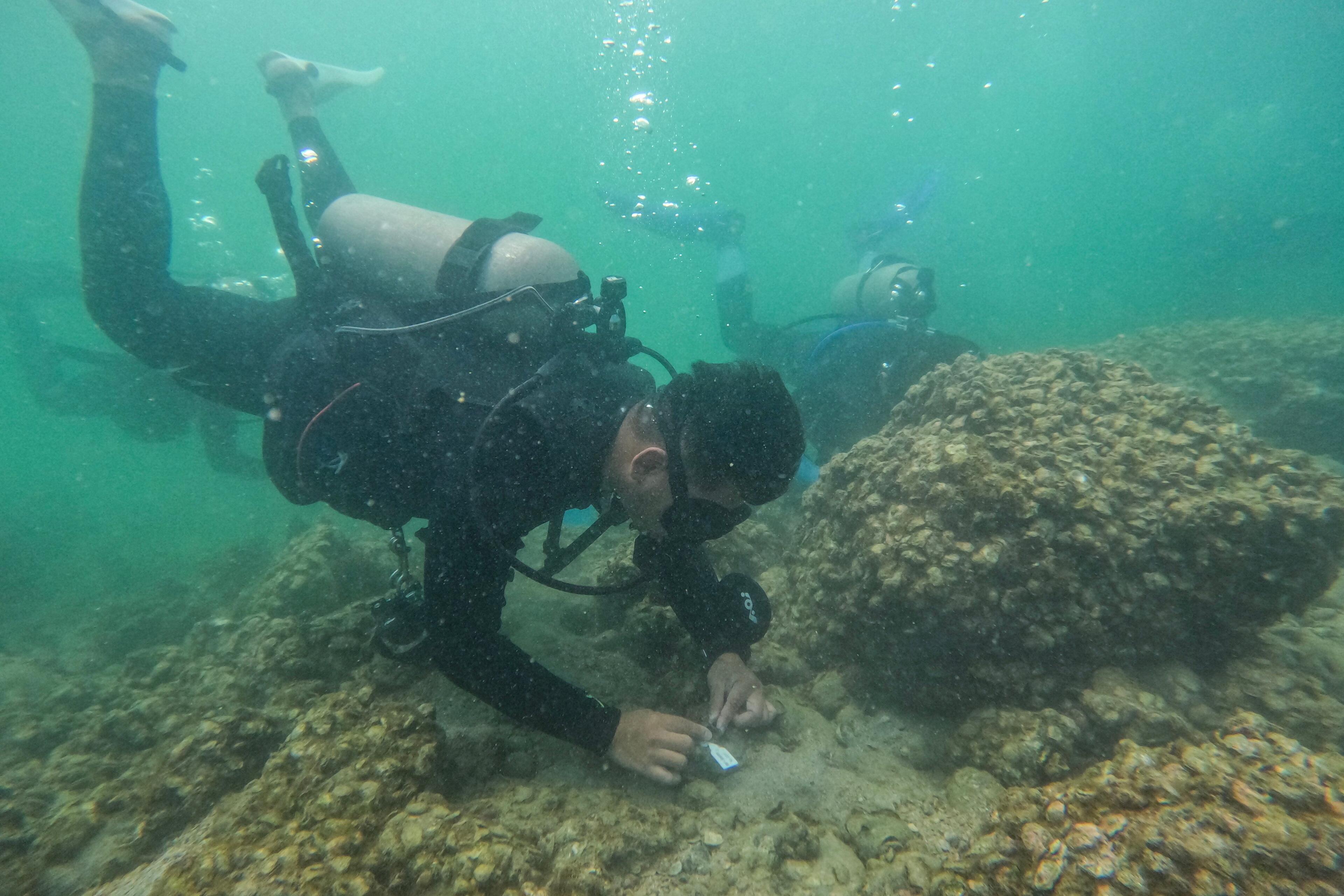
Visibility was poor as we initiated our descent. Run-off from the surrounding islands – one of the main threats to coral in the area – had turned the ocean into a thick soup. The temperature was at a high of 31 degrees Celsius.
My heart was thumping as we dived closer to the cages where we had planted Acropora coral fragments almost exactly a year ago. But to my absolute relief, they had not just survived but thrived.
Of the 140 fragments that we had planted the previous summer, 118 had made it. Not only that, but they had grown anywhere from 12 to 29cm in width and 5 to 13cm in height – roughly a two to three per cent increase. My “babies” were doing just fine.
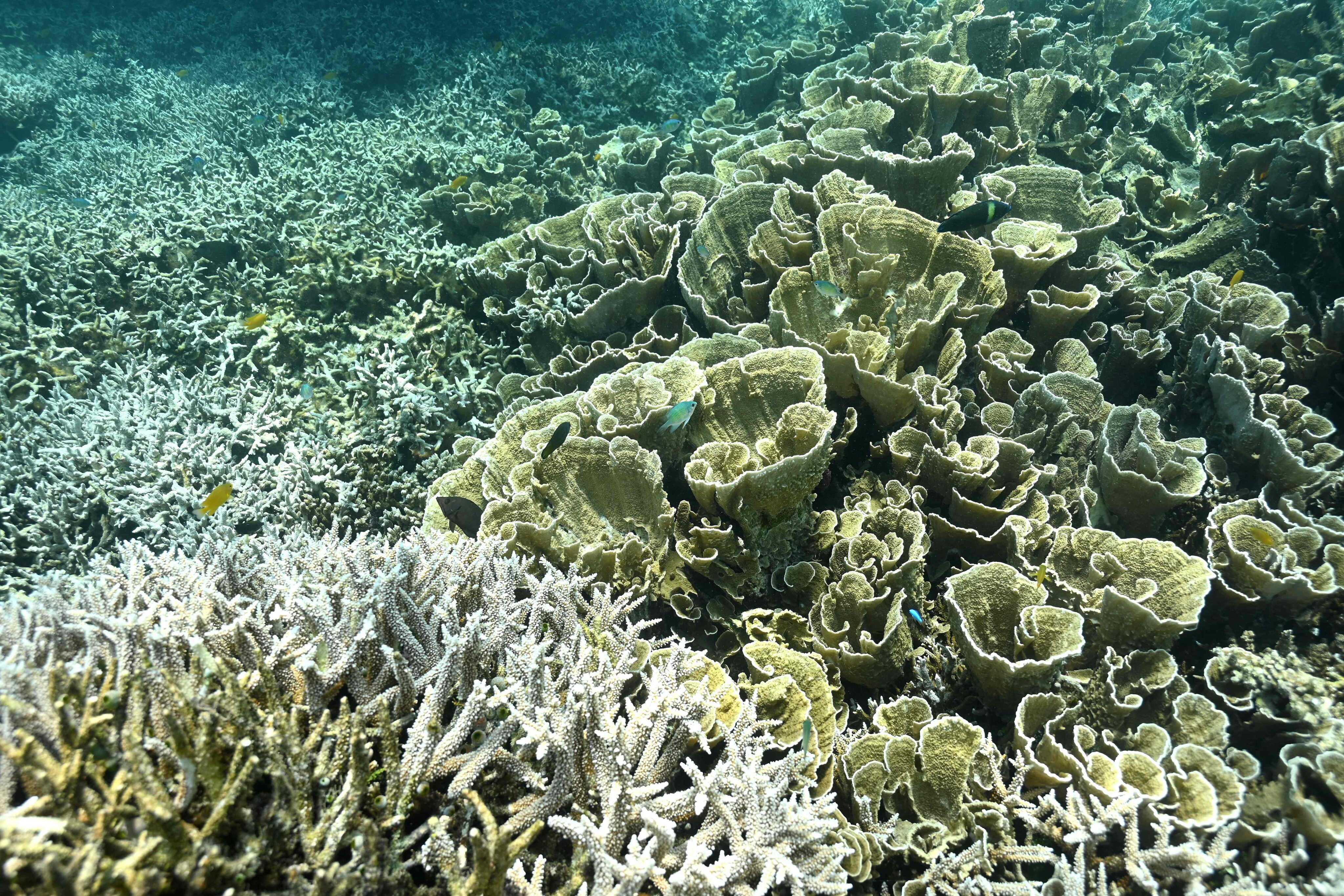
As coral returned to this reef in the Koh Rong archipelago of western Cambodia, marine life followed: pufferfish, grouper, barracuda, parrotfish, nudibranch, honeycomb grouper, blue-spotted stingray and even rare pipefish. The reef had woken up.
It made sense. Coral covers only 0.1 per cent of the ocean floor, yet it supports 25 per cent of all marine species. Nothing else punches so far above its weight.
This was my first dive of the summer – part of my second consecutive internship at the Song Saa Foundation, working on coral reef restoration around Koh Rong.
We collect Acropora fragments from the ocean floor and raise infant coral – responsibly harvested from healthy adult colonies – in a sheltered nursery. Once they have grown enough to manage on their own, we reattach them in the ocean.

I learned how fascinating coral actually is as a living organism. Most people assume they are inanimate – probably because of their hard corallite exoskeleton. But inside, there are vibrant polyps housing living tissue: tentacles, mouths, guts and symbiotic algae.
Marine biologist Sabrina Petry taught me to identify coral genera and recognise eight principal growth forms, ranging from delicate, finger-like branching structures to layered, wafer-like foliose ones.
Classroom lectures were paired with dives – all logged meticulously – where I practised surveying coral, monitoring bleaching and measuring biodiversity.
Our restoration efforts come after years of destructive fishing and the compounding damage of global warming, made viscerally real by the catastrophic 2024 worldwide bleaching event.
It had been genuinely exhilarating to watch nature push back, especially when hearing about one of the biggest milestones yet – coral spawning being observed in the area earlier this year.
What is also exciting is how technology is changing the game. Through photogrammetry, Petry and her team create detailed digital models of the reef – advanced software and artificial intelligence turning raw dive footage into precise two- and three-dimensional images. These allow accurate measurements, health assessments and species tracking.
I feel lucky to see my small contributions actually make a difference. I am struck by the ocean’s resilience. Watching these baby steps add up – that’s what keeps my passion alive.

26 years after Harinder Veriah, discrimination remains in city’s healthcare system
Jaydon Mau, Choate Rosemary Hall (Connecticut, United States)
On New Year’s Day, 2000, Harinder Kaur Veriah, a Cantonese-speaking Punjabi Malaysian, had an epileptic seizure while celebrating the new millennium.
The 33-year-old lawyer had relocated to Hong Kong and was taken to Ruttonjee Hospital by her husband, journalist Martin Jacques. The only non-Chinese patient in the ward, Veriah told her husband: “I am bottom of the pile here.”
The following morning, she died after another epileptic fit.
An inquest at the coroner’s office ruled the death a result of natural causes with no evidence of medical neglect. But the incident garnered publicity, emboldening a generation of Hongkongers from ethnic minority groups to bring forward personal accounts of medical neglect within public hospitals. Years of advocacy culminated in the Race Discrimination Ordinance, enacted in 2008.
The need for equitable healthcare has become more urgent. The year the ordinance was passed, people from ethnic minority groups made up an easily overlooked portion of Hong Kong’s population. But the 2021 census showed that over 619,000 people identified as non-Chinese, making up 8.4 per cent of the total population.

Omitting foreign domestic helpers still leaves over 300,000 people with ethnic minority backgrounds who call the city home. Foreign domestic helpers in Hong Kong also require additional attention. They are often left out of both government figures and academic studies, treated as footnotes rather than included in the data when many of them face the same obstacles to adequate healthcare.
A domestic helper’s access to proper medical services is usually determined by their employer’s willingness to allow them time off. If an employment contract is terminated while they are sick, their immigration status becomes that of a visitor, effectively barring them from the city’s subsidised health network.
Lacking robust interpreter networks, culturally competent providers and relationships with local organisations, many districts are not built to host residents who do not speak Chinese. These patients experience more negative experiences than their Chinese-speaking counterparts. Barriers often lead to delayed treatments and poorer health outcomes among ethnic minority groups, highlighting the need for systemic change.
In recent years, despite more languages being used at hospitals, there are still few clear guidelines. Many times, family members or even strangers have to translate sensitive medical information, a nonviable substitute for a professional translator.
Harinder Veriah’s death forced Hong Kong lawmakers to consider racial discrimination. But today, the city’s healthcare system still does not reflect its modern-day population.

How alarms affect your body’s circadian clock
Allegra Khomara, King George V School
You were supposed to be up at 6am. Instead, you woke up at 5.57am and fell right back into deep sleep. At 8am, you wake up, tired and lethargic.
Setting an alarm to wake you up in the morning is not always helpful.
When you wake up before your alarm rings, it’s because your body no longer relies on an external force to set your internal clock. Your mind’s subconscious knows you usually get up right about now.
The human brain maintains circadian timing – an internal clock tracking the rhythms of day and night. This helps it prepare your body for waking up, with measurable hormonal shifts, temperature gradients and slow adjustment of cortisol levels – the hormone associated with stress.
Sleep moves in cycles; the final hours before waking up are dominated by rapid eye movement (REM) sleep, the most cognitively active part. The body’s muscles are essentially offline, so the sleeper cannot easily startle, orient or regulate.
An alarm essentially shocks you to wake up. This spikes cortisol levels and causes morning anxiety. When you jolt awake, a sleep cycle finishes and your internal clock believes you should be up now. If you go back to sleep, you mess up this cycle.

Expressions of emotion in Chinese and English
Echo Luo Kai-jing, Tai Kwong Hilary College
Linguistic relativity considers whether language shapes our world view. As a bilingual student, I believe it influences but does not completely control or restrict our thinking.
In Chinese, I describe events closely connected with my emotions. I think my tone is serious, reserved and dignified. But when I describe my day or something that happened in English, I am more direct and passionate. I also feel much more relaxed or energised. When I am upset, I prefer expressing it in English.
I feel that many people who speak English very well tend to be lively and outgoing, while some Chinese speakers appear really serious and disciplined. I understand this is just my own perspective, and it is not true for everyone. An individual’s cultural background and their personality play a huge role.
Researchers have investigated these linguistic expressions of emotion, often citing Mandarin’s nature as a tonal language for some of the differences.
As a 2022 article in Brain Sciences says, Chinese-speaking people tend to be more receptive, reflective and adaptive, whereas native English speakers may be more reactive, proactive and interactive.
Today, we have more opportunities to learn and master other languages, creating a bridge that allows us to explore richer ways of thinking.