Read the following text and answer the quiz below.
[1] When you think of mooncakes, the ones that come to mind tend to be the classic sweet lotus paste versions with salted egg yolk, or maybe a more modern interpretation like one with a salty-sweet baked custard filling.
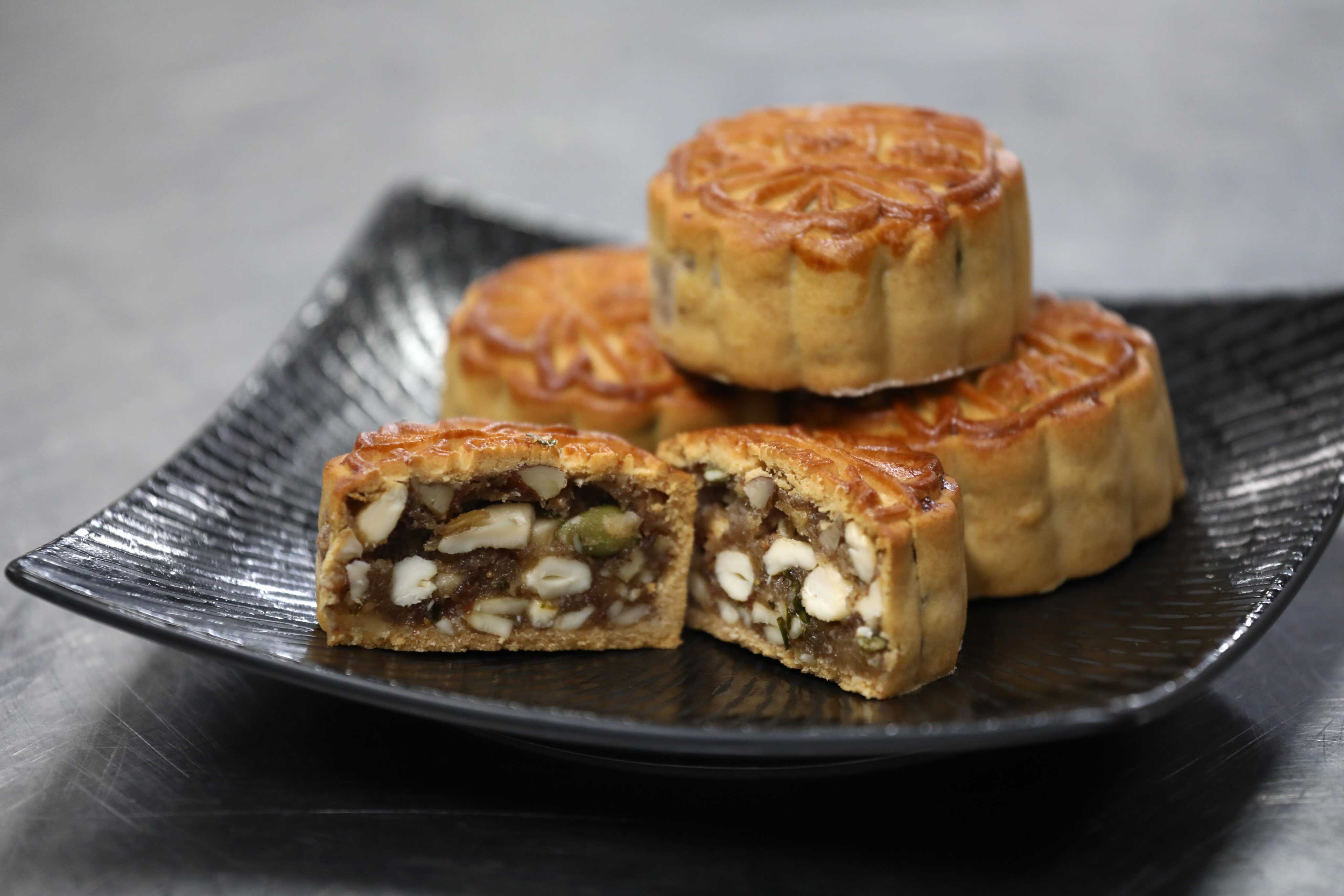
[2] Historically, the first mooncakes were made with a mix of nuts and seeds. The five-kernel (wuren) mooncake – filled with ingredients including walnuts, almonds and sesame seeds – was considered the height of sophistication from the 1950s to the 1970s.
[3] Five-kernel mooncakes originated from the Hu cakes introduced during the Han dynasty (206BC-AD220), when Chinese diplomat and explorer Zhang Qian brought back nuts, such as walnuts and sesame seeds, from the western regions, laying the foundation for their use in mooncakes.
[4] Later, during the Tang (618-907) and Song (960-1279) dynasties, these small cakes filled with nuts became popular among the common people, gradually becoming associated with the Mid-Autumn Festival. Similar multi-nut-filled cakes appeared in Qing dynasty (1644-1912) publications such as the Chinese classic novel Dream of the Red Chamber and the gastronomical guide Recipes from the Garden of Contentment.
[5] The five kernels symbolise completeness and harmony, making it a classic representative of Cantonese mooncakes. The typical kernels would include walnuts, almonds, olive kernels, melon seeds and sesame seeds, which symbolised the virtues of benevolence, righteousness, propriety, wisdom and trustworthiness – in that order.
[6] Long before white lotus seed paste or modern snow-skin flavours took over the market, wuren was the undisputed king of mooncakes across mainland China and Hong Kong. In times of material scarcity, the calorie-dense components of rich nuts, Jinhua ham and cured pork fat were highly precious, luxury food items.
[7] In the early 1950s, imported nuts were rare in Hong Kong, so the traditional five-kernel filling was often replaced with the more common peanuts, melon seeds, sesame seeds and candied winter melon. This new version was usually called a five-nut fruit mooncake, said Tse Jing-yuen, the operator of Tai Tung Bakery, one of Hong Kong’s oldest bakeries.
[8] According to Tse, there have been many variations of the five-kernel filling. The most common sweet version included candied winter melon, while the savoury version included preserved mustard greens. By the 1960s, people wanted more novelty when it came to flavours. Gradually, fillings such as five-kernel rose sweet mooncake, straw mushroom braised chicken mooncake, and roast duck mooncake appeared.
[9] Modern five-kernel mooncakes have also evolved. For example, Lung King Heen, a two-Michelin-starred Chinese restaurant in Hong Kong, has added pistachios for a more satisfying bite, saying it wished to “enhance the overall flavour and texture” of the treat.
Source: South China Morning Post, September 1
Content provided by British Council