When does empathy cross the boundary into people-pleasing?
A Hong Kong student film, As You Wish, explores the mental health impact of constantly putting others’ needs above your own.
Produced by Sonakshi Shrivastava, Rachell Lee and Jayne Lau, all 17-year-old students at King George V School, the short film follows a teenager, Alice, who struggles to say no to others.
“[People-pleasing] is tied to anxiety, fear of conflict and self-worth,” said Sonakshi, who played the film’s main character. “Alice isn’t weak. She’s empathetic, but she hasn’t learned boundaries yet.”
Rather than examining Alice’s conflict with her peers through dialogue, the filmmakers chose to focus on her psychological spiral and the idea that the only one who can get Alice out of her troubled state is herself.
Jayne, the main cinematographer and one of the directors, noted: “Alice thinks she’s irreplaceable because she does absolutely everything for everyone. But in reality, the moment she stops producing, the moment she falters, she’s completely discardable.”
In April, As You Wish was featured in the PKX Teen Arts & Film Festival in New York, which showcases international teen films and visual art exhibits.
In March, the film took home awards for best sound design and best actress at the third Babel Film Awards’ Open Competition, which showcases student filmmakers across Asia. The annual event is hosted by Hong Kong-based Babel Film Workshop, a film and media arts education provider. As You Wish is available to stream on Babel Slate, an online space for student filmmakers.

Hong Kong-based therapist Elizabeth Jung Rowlinson, who practises at Your Relationship Clinic, explained that people-pleasing “involves prioritising the needs and desires of others over one’s own”.
Signs of this include having difficulty saying no, excessively apologising when it is not your fault, avoiding conflict and taking responsibility for others’ negative moods.
Rowlinson explained why adolescents would be particularly prone to people-pleasing. Teenagers’ brains are hypersensitive to social rewards and peer approval, especially as they become more independent from their families.
“Saying yes frequently, not wanting conflict and constant worry about fitting in has to do with wanting to identify [with others] ... The teen brain views peer judgment as a physical threat,” the therapist said.
The film uses mirrors to show Alice’s gradual breakdown and reflect her conflicting states.
“Alice’s mirror self is like a repressed part of herself that knows the danger of being a [people-pleaser],” said Rachell, another director and the main sound designer.
“I think we all have a part of ourselves that sees our flaws clearly, but whether or not we dare to face [them] is another question.”

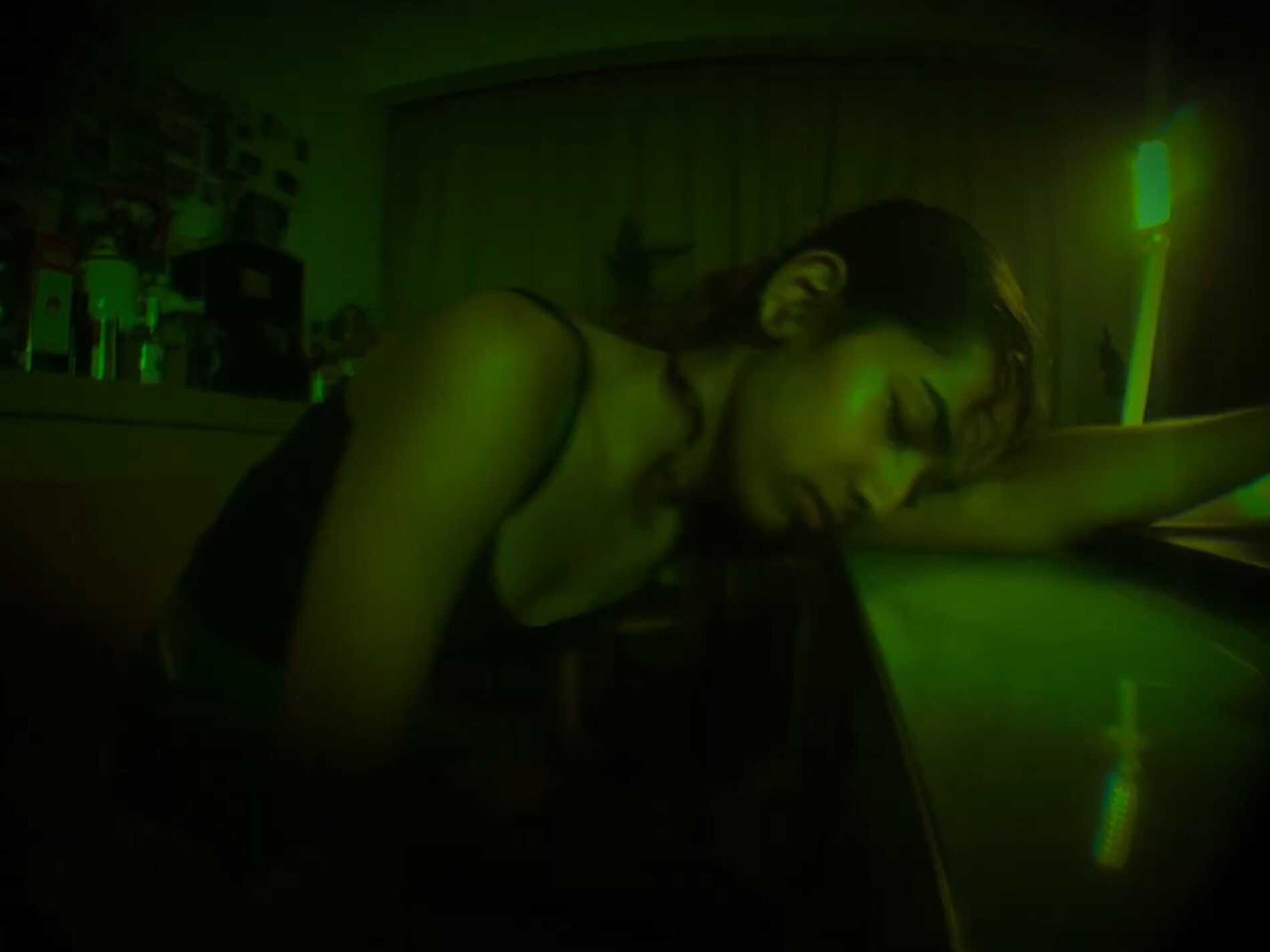
The film also explores people-pleasing’s emotional consequences for Alice through sound design and lighting.
Rachell noted how small, everyday sounds in the film’s background – a coffee machine, an alarm and typing on a keyboard – become more amplified as the story progresses.
“Overlapping common household sounds ... created the sense that [Alice’s] regular world was crashing down on her,” Rachell explained.
Jayne added: “It is suffocating by design because that’s exactly what it feels like to live in that head space.”
She also noted that the lighting reflected how someone who is struggling will have their view of society distorted.
The lighting progressed from a warm “golden hour glow” at the start of the film to a “poisonous green” as Alice began to burn out, Jayne noted.
The colour change, in addition to the blurred fishbowl lens, was meant to illustrate how this internal fatigue warps one’s perception of the world.
The film lacks a typical resolution, reflecting the danger and helplessness of burnout.
“By regularly and long-term placing other people’s [needs] above your own, one could start to feel neglectful or resentful,” Rowlinson warned, adding that it could cause a person to lose their personal direction and passion.
For those struggling with people-pleasing, Rowlinson suggested keeping a logbook that tracks feelings and the reason for these emotions, which will help address the pattern of behaviour.
She also suggested setting healthy boundaries by examining your values and definition of friendship.
Having boundaries doesn’t mean automatically saying no; instead, they are about knowing your limits and voicing them out.
Sonakshi said she hoped the film would encourage students to examine and establish their own boundaries.
“The hidden cost of kindness should not be at your own expense,” she emphasised.
“If As You Wish starts even one conversation about that, then it’s done its job well.”