
Difficulty: Challenger (Level 2)
We might not think twice about getting a sunburn. However, sun damage can lead to serious health risks later in life.
Research from 2024 shows that 59 per cent of children have been sunburned at least once. While the pain and redness fade, sunburn causes irreversible damage that can lead to skin cancer.
Experts warn that sunburn during childhood or adolescence can double the risk of developing melanoma. This is the most serious type of skin cancer.
According to the British Association of Dermatologists (BAD), a quarter of lifetime UV damage occurs before the age of 20. Sunburns can range from redness on the surface of the skin to more severe injuries (see graphic).
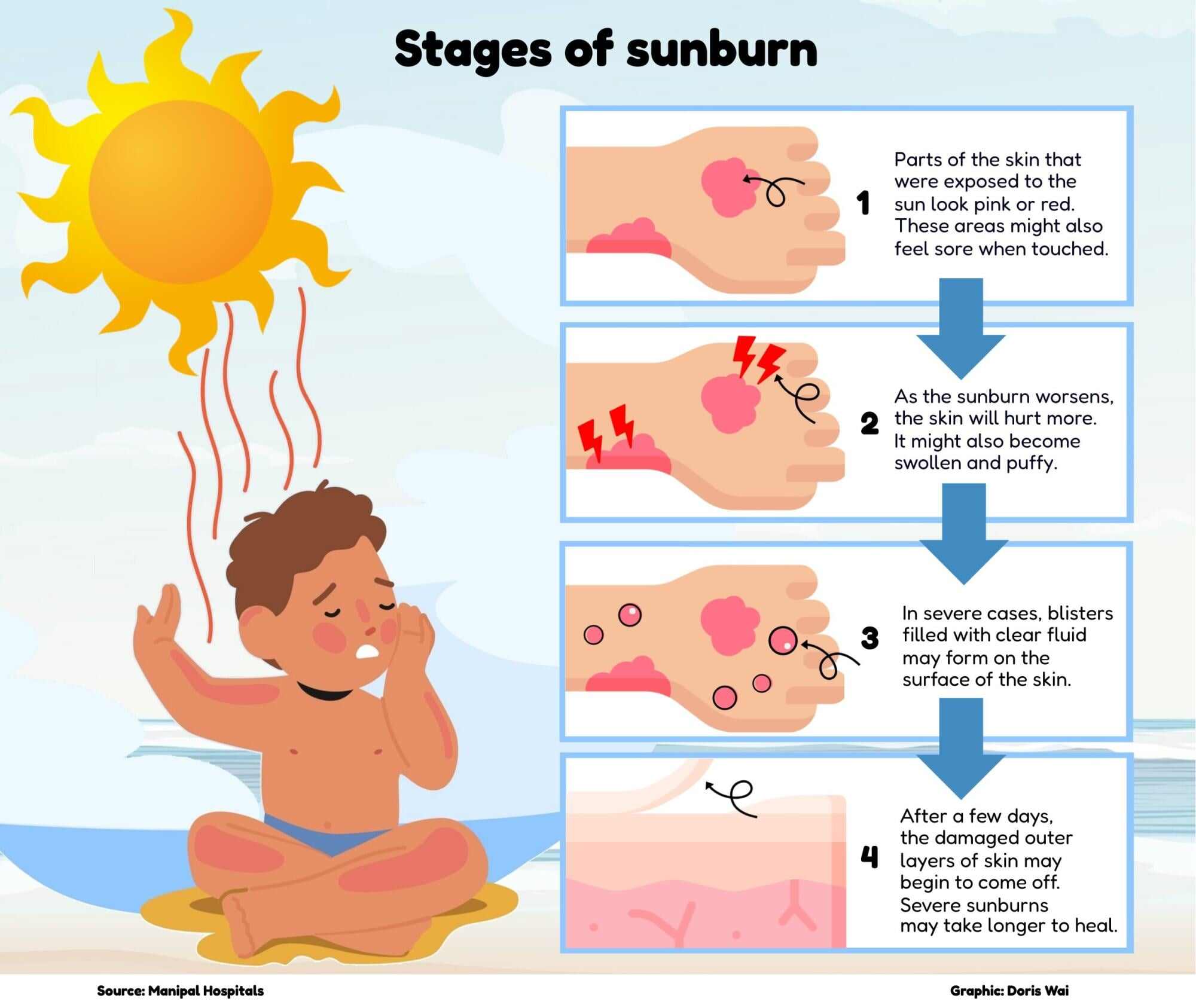
“Severe sunburn can cause blisters, heatstroke, and heat exhaustion,” Professor Tess McPherson said.
She is a consultant dermatologist at BAD. “Experiencing five or more bad sunburns before age 20 increases your melanoma risk by 80 per cent.”
Sophie Brooks is a health information manager at Cancer Research UK. She said that UV radiation damages the DNA in skin cells. “If enough DNA damage builds up over time, it can cause cells to grow out of control, leading to skin cancer,” Brooks said. She warned that a tan is not safe either. It is a sign the skin is trying to protect itself from damage.
Young people should take measures to protect themselves from sunburn. These include using a fragrance-free sunscreen with a minimum of SPF30 and UVA protection.
Reapply the sunscreen every two hours and immediately after swimming, sweating or towel-drying.
Remember that sunscreen does not offer 100 per cent protection. When outdoors, it is best to spend time in the shade and wear protective clothing.