What happens when we pause to examine the ordinary? At a new exhibition at Hong Kong’s M+ museum, visitors can play with the mundane and discover the power of design.
“Design Ah! Experience the Wonder of Everyday Design” at the West Kowloon Cultural District invites us to look at our surroundings with fresh eyes, from Hong Kong’s yellow pedestrian crossings to the rigid classroom chairs that shape a child’s day.
The family-friendly exhibition drew thousands of visitors when it opened over the weekend, resulting in two-hour wait times and sold-out merchandise. But after attendees took to social media to express frustration over poor crowd management, the museum has offered those ticket holders one free entry in the next three months as compensation.
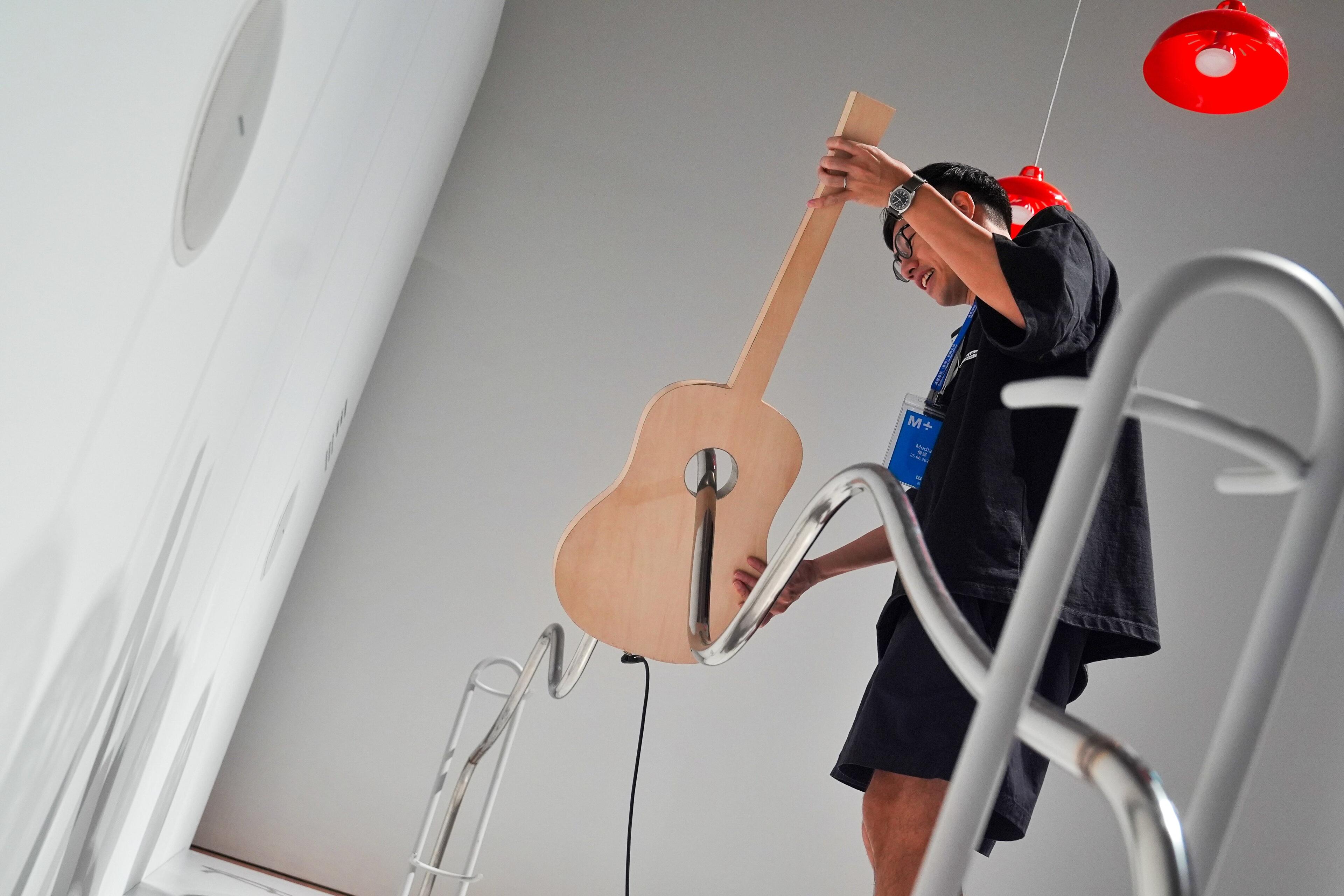
This viral exhibition is an interactive, family-friendly space that explores how design governs basic actions like walking, eating and sitting. Through participatory installations, tactile games and immersive audiovisual set-ups, the exhibition encourages visitors of all ages to look closely at everyday objects and learn through play.
The exhibition concept is based on a well-known children’s educational television programme called Design Ah! neo, produced by Japan’s national broadcaster NHK.
This beloved Japanese show explores design and its role in everyday living, such as the way a green bottle cap is made or how patterns are pressed onto toilet paper rolls to make them more absorbent.
A standard ticket costs HK$190 or HK$400 for a combo admitting two adults and one child, among other options.
Explore the surprises of everyday life
According to Keri Ryan, associate director of learning and interpretation at M+, the exhibition invites visitors to appreciate the “aha” moments or surprises that often go unnoticed in our lives.
“You don’t really think about your everyday objects. So they’re often disposable, or they’re things you just glance past. So [the exhibition] ... it’s like the hidden elements of how you interact with your objects [that] can surprise you,” she explained.
“Like, if you have your bottle of water, you don’t think about the actions ... but you actually twist off the lid. There’s a very specific design made for that. But that action of doing it forces you to think a bit more about your object.”
She added that the exhibition aimed to help people pay attention and observe.
“People are always staring at their phones. They’re not looking at what’s around them and appreciating ... the interesting aspects of the way we go about our lives and how we interact with the world,” she said.
“Hopefully it helps people appreciate what they have in their lives and realise that even simple things will have meaning and they’ve been made for a certain purpose.”
Dicky Yeung, curator of learning and interpretation, encouraged visitors to explore the exhibition in a “self-directed journey”.
“When you’re watching a TV programme, it is prescriptive, but when you’re visiting an exhibition, you can determine your own path. You can choose the sequence and decide what kind of objects you want to experience first,” Yeung said.
“This is what we want to encourage our visitors to do for any exhibition, so we integrated this philosophy into developing the set-up.”
He said he believed that museums should foster an intuitive environment where visitors – especially students – could engage with the exhibits and form their own understanding of art without relying on labels or guides.
Empathy in design thinking
The curators also hoped the exhibition would expose visitors to principles of design thinking, which is an approach to solving problems by creating things that fit humans’ needs.
Design thinking should begin by listening to what students already think and have experienced before any formal instruction takes place, Yeung said.
“When we’re talking about design thinking, the very first question we should ask ourselves is ‘What is design?’ ... because everything starts from observations,” he noted.
Using the exhibition’s chair display as an example, the curator challenged students to imagine changing the object’s appearance, size or environment and consider how this would affect the chair’s use.
Ultimately, design thinking is not just about making objects – its true purpose is to nurture empathy for the people who use them.
“It’s about how you think about the world [and] how you can put yourself into another’s shoes,” he said.