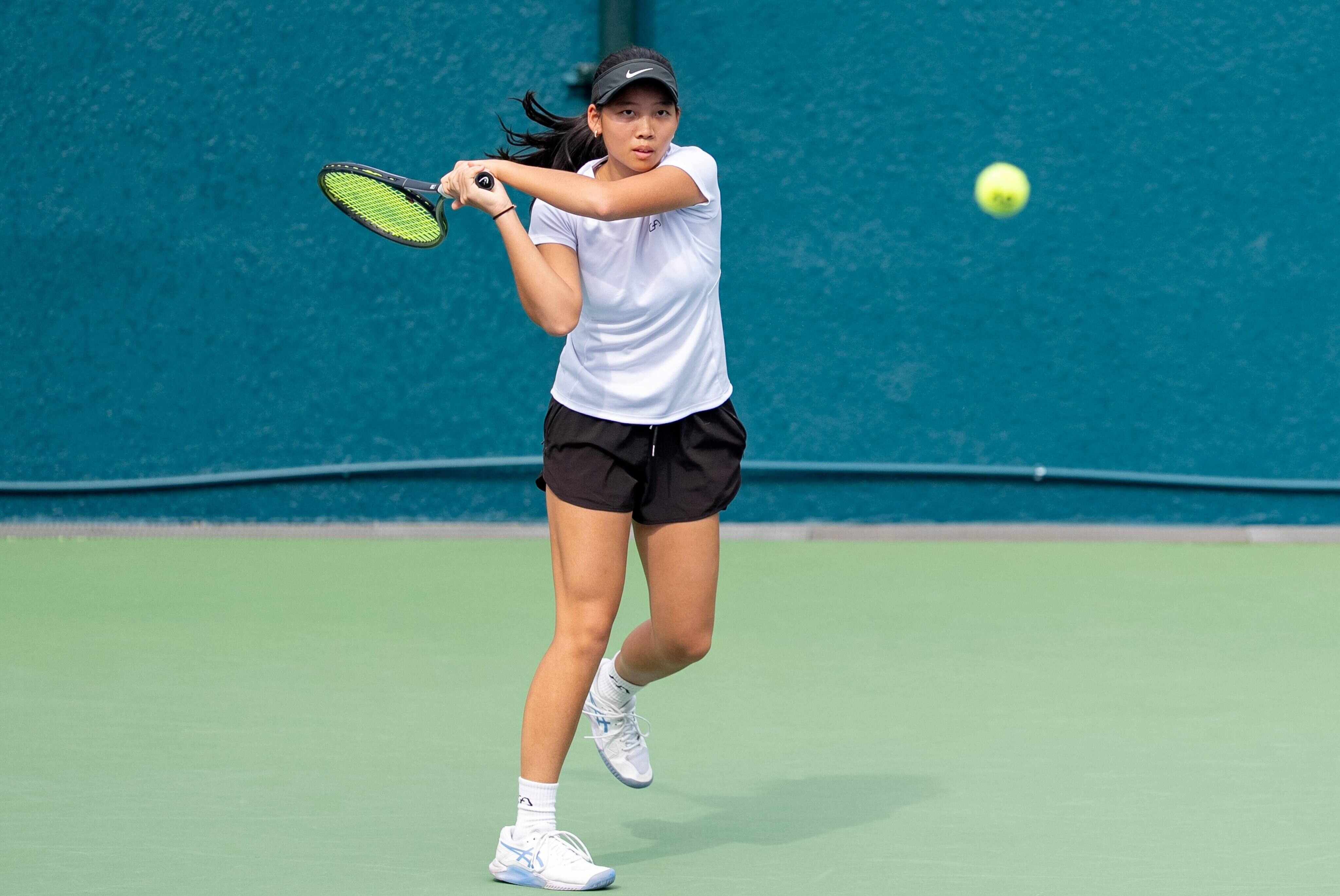
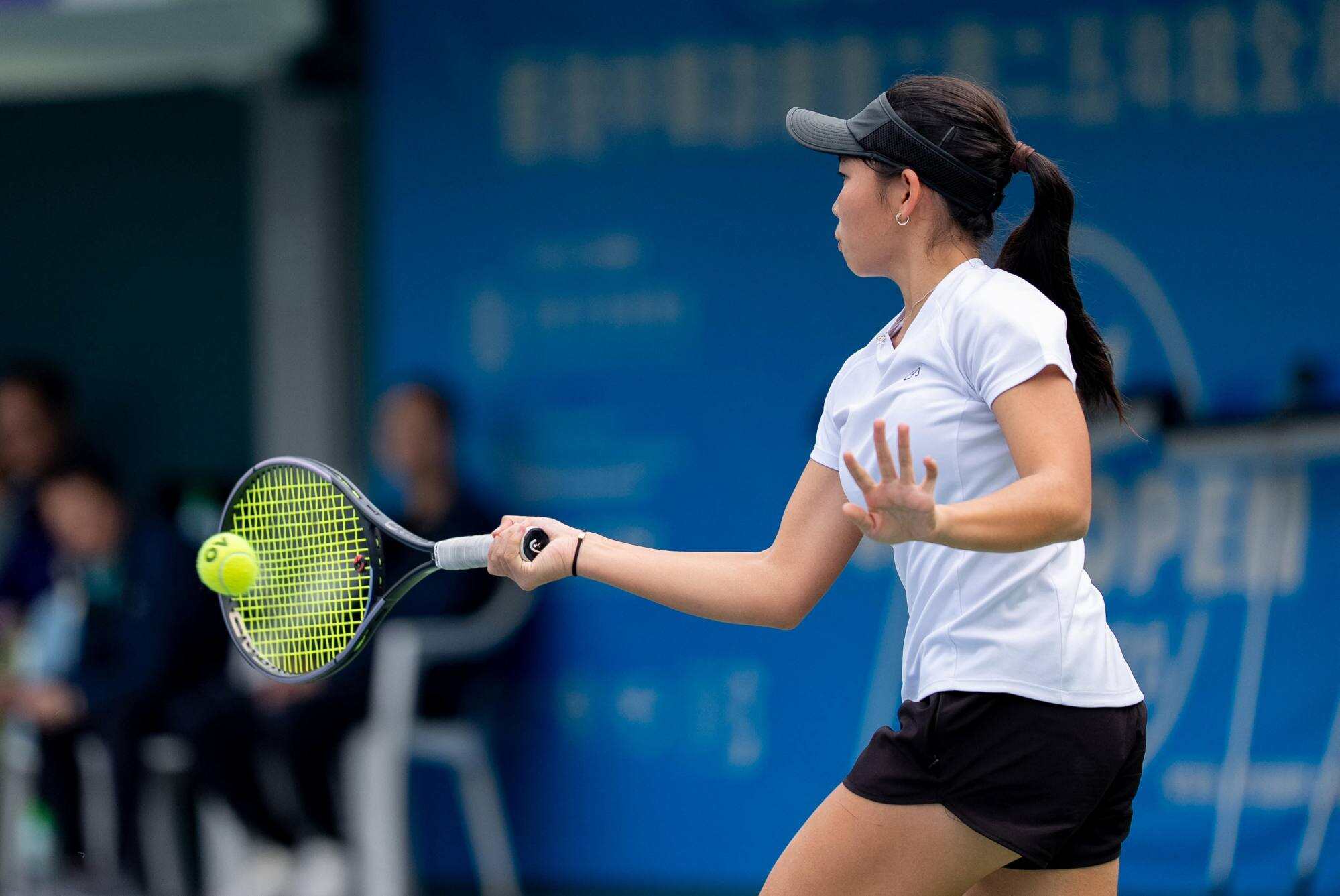
On a tennis court, Rosalyn Chan Hau-ching is alert and adaptive, never settling into one rhythm for too long.
That quality has defined the 18-year-old’s path from an energetic child in Hong Kong, who tried almost every sport, to a three-time consecutive National Junior champion – a local record. Now, the former Chinese International School pupil is a student-athlete at the University of Chicago in the United States.
After trying sports like football, track and table tennis, she got hooked on tennis: “I suppose the variety and difficulty one can experience in the game of tennis particularly drew me in as a kid,” she recalled.
By the age of six, she was training four or five times a week and competing in local events. At 11, she was invited to represent Hong Kong overseas. She held her own at a tournament in Japan, but the results were secondary.
“More memorable than the results were the memories I had and the connections I made with players from other countries. It really helped me recognise the opportunities I was given representing Hong Kong,” she said.
“It’s nerve-racking to compete for something bigger than just myself, but I take pride in competing for Hong Kong,” she added.
Balancing that responsibility with the demands of the International Baccalaureate (IB) Diploma required discipline.
“The first year and a half of the IB, heavy with long-term projects, tested me. But I was prepared by my years of experience as a student-athlete,” she said.
“I reached out for extra support, completed work while travelling and treated every training session as high value rather than high volume,” Chan explained.
“I recognised the value of quality over quantity, cutting down moderate but long sessions into shorter yet more productive practices.”
Calendars, to-do lists and an unapologetic willingness to ask for help became her quiet weapons.
“When you aren’t afraid to ask for help, many – if not most – are willing to support you,” she said. “I paid close attention in lessons so that catch-up work was minimised, dialled training down during the most intense academic stretches, then ramped it back up.”
The result surprised her: strong final IB results alongside continued progress on the court.
In 2025, she won four international titles, including a doubles crown she earned with a friend from Thailand at a higher-level J60 ITF event. It marked a personal high.
“It gave me confidence in my ability to compete at an international level, even against full-time players from other countries,” she said.
“It showed me my potential to continue improving and going even further in the future. I could see how frequently competing at an international level against high-level athletes improved my physical skill set as well as my mental approach.”
Last year, Chan also levelled a 40-year local record by capturing the National Junior Championships three years running.
Her hunger to win fuelled grit but also led to extreme pressure and stress not to lose.
She shifted her strategy when she began simply trying to play her best, point after point.
“This approach took off a lot of pressure and benefited my performance overall ... Being more focused on playing each point well instead of the score was a major contributor,” she said.
“As cheesy as it sounds, it really is helpful to forget about what has passed and focus on what’s in front of you.”
Competitive sports, Chan said, helped her build resilience and adaptability. She learned to switch to her backup plan when the first tactic failed – an instinct she also applies to analysing a book or navigating a sudden change of plans.
“I now perceive challenges as an opportunity for growth and improvement and to bounce back from setbacks by looking ahead,” she said.
Off the tennis court, Chan has poured her energy into mentoring younger students and community work.
For the past two years, she has shared her student-athlete journey through “OneInchVertical”, a service project in collaboration with the NGO Christian Action, which supports underprivileged children of different ethnicities and backgrounds.
“Sport is always a way for individuals to find a sense of belonging,” Chan said.
One memory stands out for Chan from her volunteering experience. She recalled how at first, the older boys she volunteered with were reluctant to play football with the younger girls. But eventually, “Persistence broke down those barriers until all-inclusive games became the norm. We tried hard to make it work and ultimately broke down the prejudices related to women and girls in sport.”
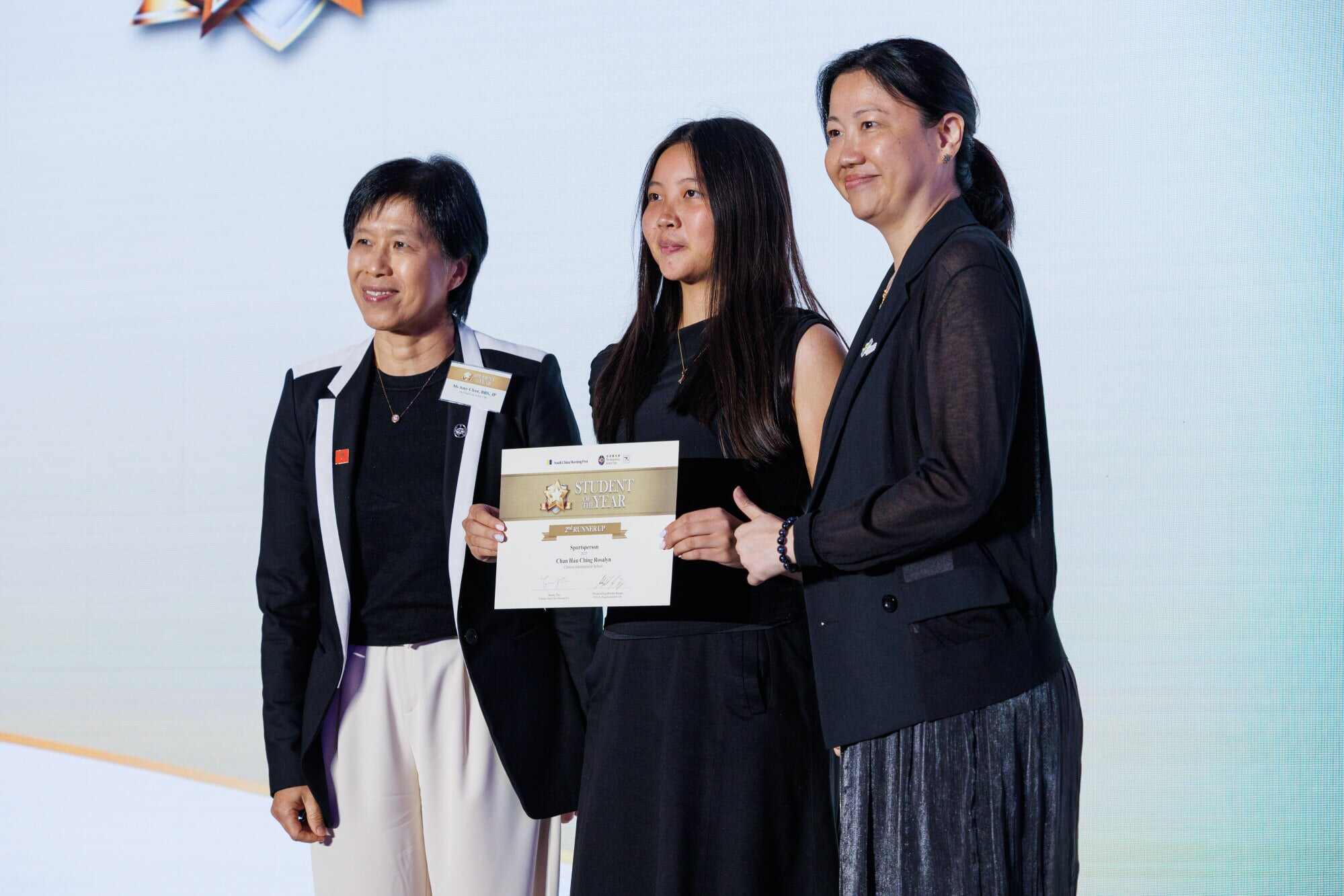
Chan’s achievements make her a role model for others. She was honoured for her hard work and persistence when she was recognised as a finalist in the Sportsperson category of the 2025/26 Student of the Year Awards, organised by the South China Morning Post and solely sponsored by The Hong Kong Jockey Club.
This year, Chan began studying economics and biological sciences at the University of Chicago while competing in NCAA Division III tennis.
“My plan is to keep playing competitively and to join community outreach programmes that use sport for education and social mobility,” she said. “I want to encourage younger athletes to pursue both sports and studies rather than sacrifice one [for the other]. Sharing my own story and journey can inspire young student-athletes to balance both.”