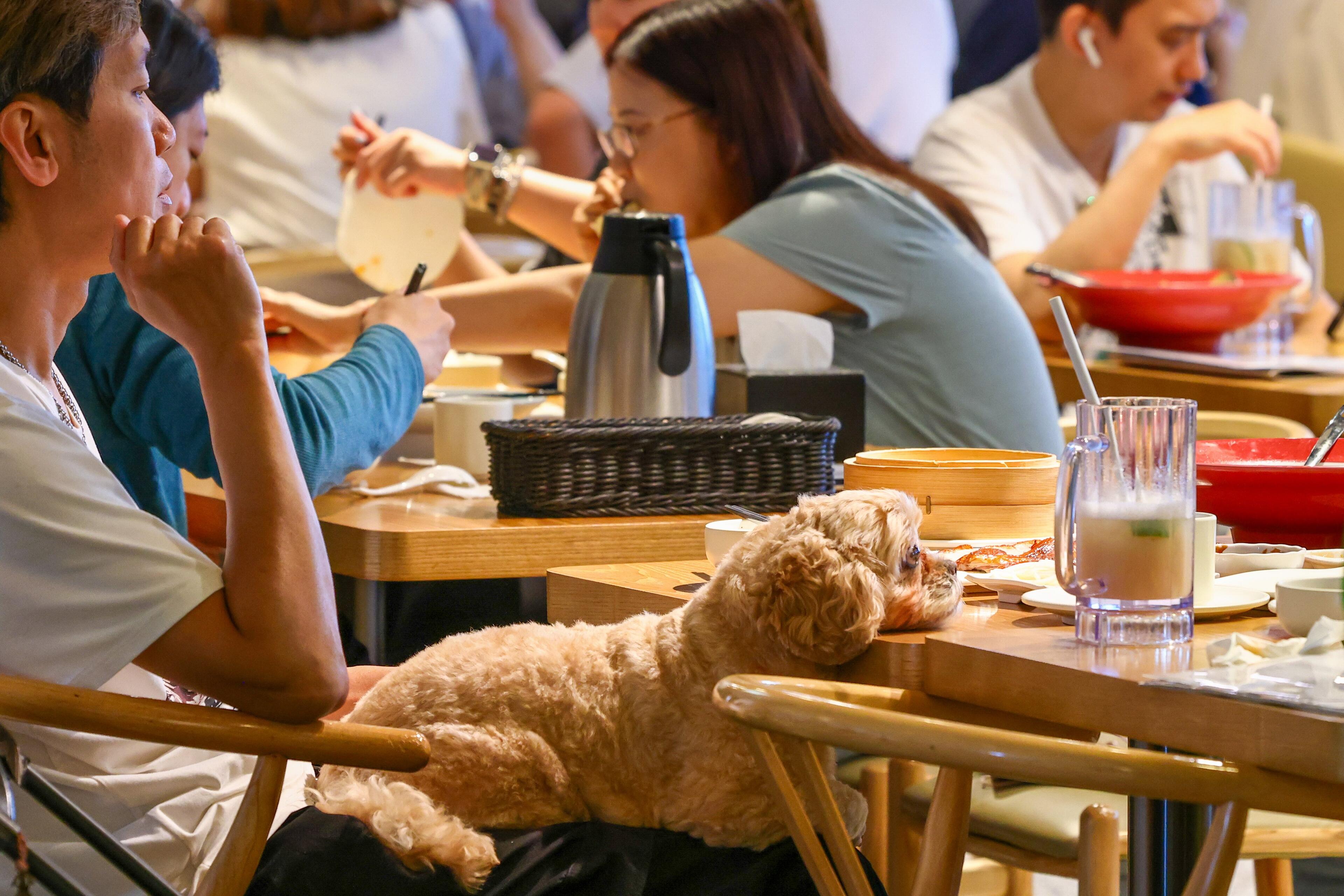
A licensing scheme permitting dogs in Hong Kong restaurants has received an overwhelming 2,100 applications, which is more than double the allocated quota of 1,000, according to food hygiene authorities.
In response to inquiries from the South China Morning Post, the Food and Environmental Hygiene Department said on Monday that it had received more than 2,100 applications by 12pm, the last day of submissions.
The application window opened on May 18 and drew 700 applications, or 70 per cent of the quota, on the first day.
Successful applicants can add the dog-admission endorsement to their food business licence for a fee of HK$140 (US$17.90).
The department expects the scheme to launch in July, with up to 1,000 restaurants included in the first phase.
“If more than 1,000 applications are received, allocations will be made by balloting,” a spokesman said.
Catering sector lawmaker Jonathan Leung Chun said he anticipated strong demand because the city was undergoing economic transition and businesses needed to forge new paths.
“I initially expected cafes and restaurants near the waterfront to show interest, but I did not foresee Chinese restaurants approaching me to learn more about the scheme,” he said.
“It seems that the industry has aspirations for the pet economy, that’s why the response has been so overwhelming.”
For Chinese restaurants, Leung said there was an exclusivity element that attracted them.
“Some even wanted to host weddings with pets,” he said.
Under the scheme, restaurants larger than 20 square metres (215 sq ft) were eligible to apply, the department said.
For safety reasons, authorities will not accept applications from hotpot, teppanyaki and barbecue restaurants, including Korean-style establishments.
Under the policy, dogs must be kept on leads no longer than 1.5 metres (4.9 feet) and remain under the control of an adult. Pets must also be kept at least 1.5 metres away from food preparation areas, including bar counters and salad bars.
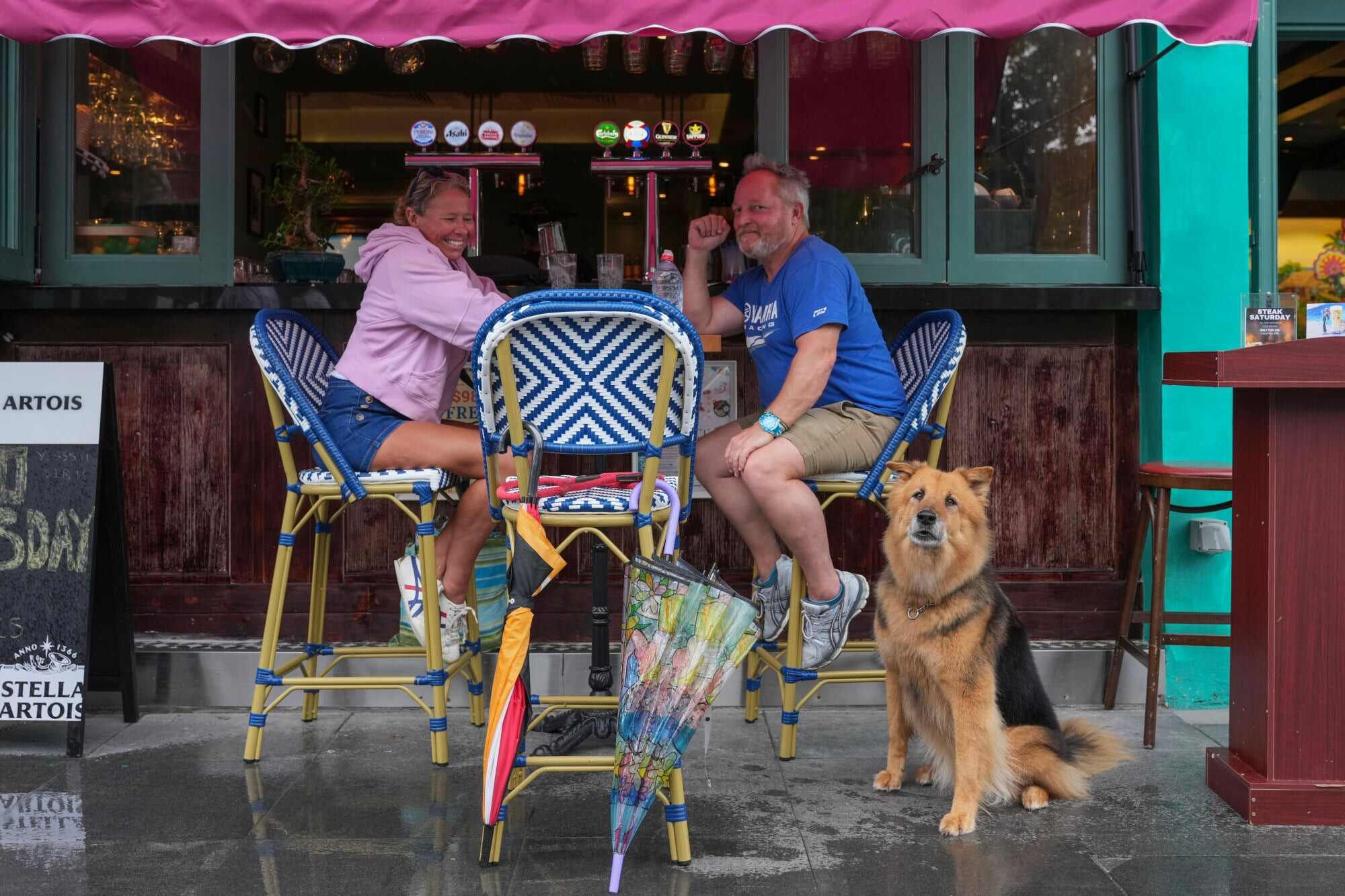
However, Leung noted that some caterers were still unclear about the rules when they approached him.
For example, some restaurateurs thought that the regulations only applied to part of their premises if they sectioned off a dog-friendly zone, Leung said.
“Others said neither they nor their staff have had experience dealing with pets,” he said.
Leung added that some operators did not tell their staff about the application or survey whether their employees might be allergic or afraid of dogs.
He urged successful applicants to approach animal groups for training sessions for their staff so they would be prepared for the launch of the scheme.
The department earlier said it was training 90 officers to assist and inspect restaurants applying for a new dog licence.
The officers would visit all 1,000 restaurants to explain the laws and licensing conditions, and conduct inspections, authorities said.
They added that, depending on demand and feedback from caterers, a second batch of licences could be opened for registration by the end of the year.
Leung said implementing the scheme in phases was necessary for both the government and operators, so both sides had time to iron out the details and reduce friction in society.
“After the first six months, if operations are smooth, I am in support of speeding up the application for the coming phases,” he said.