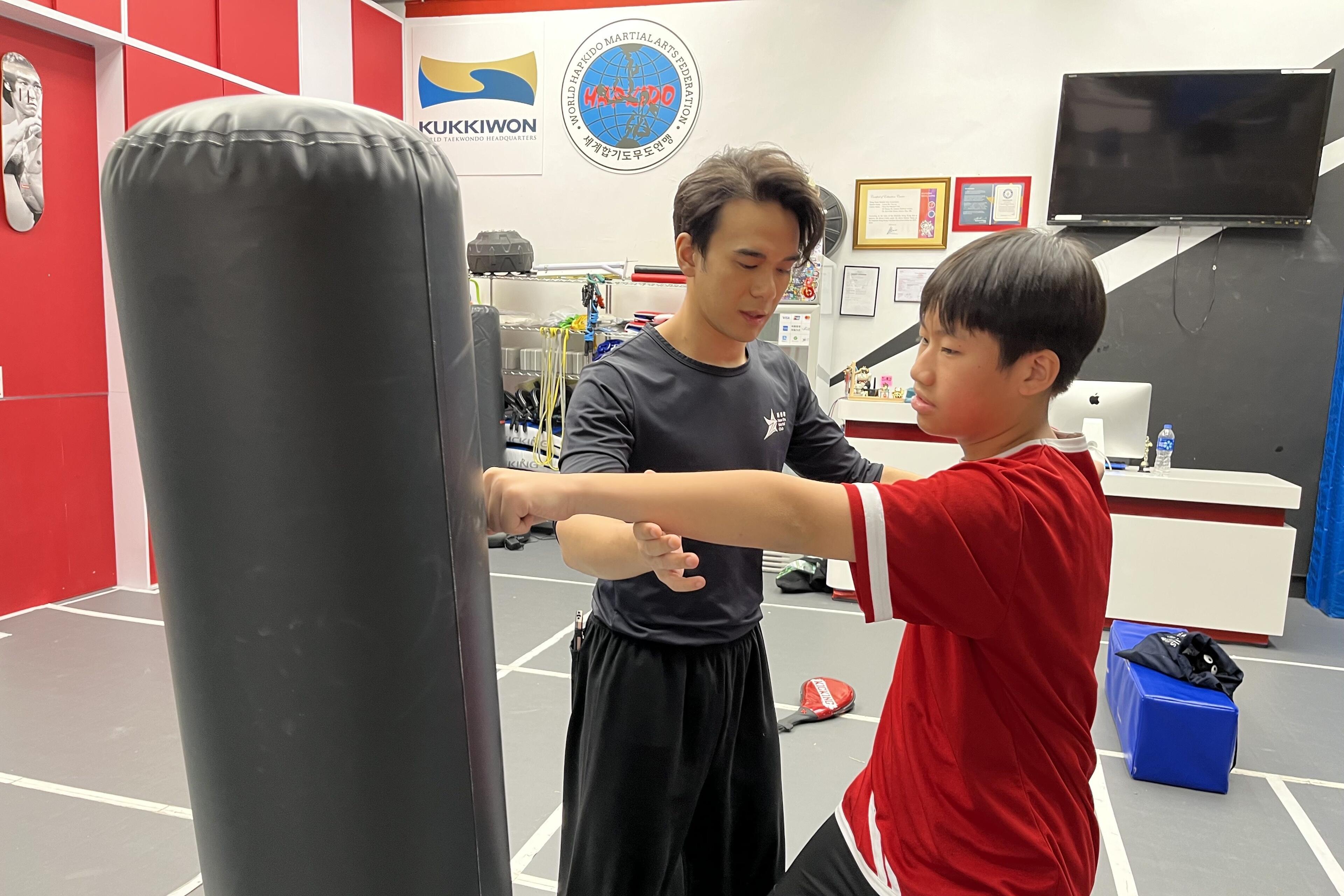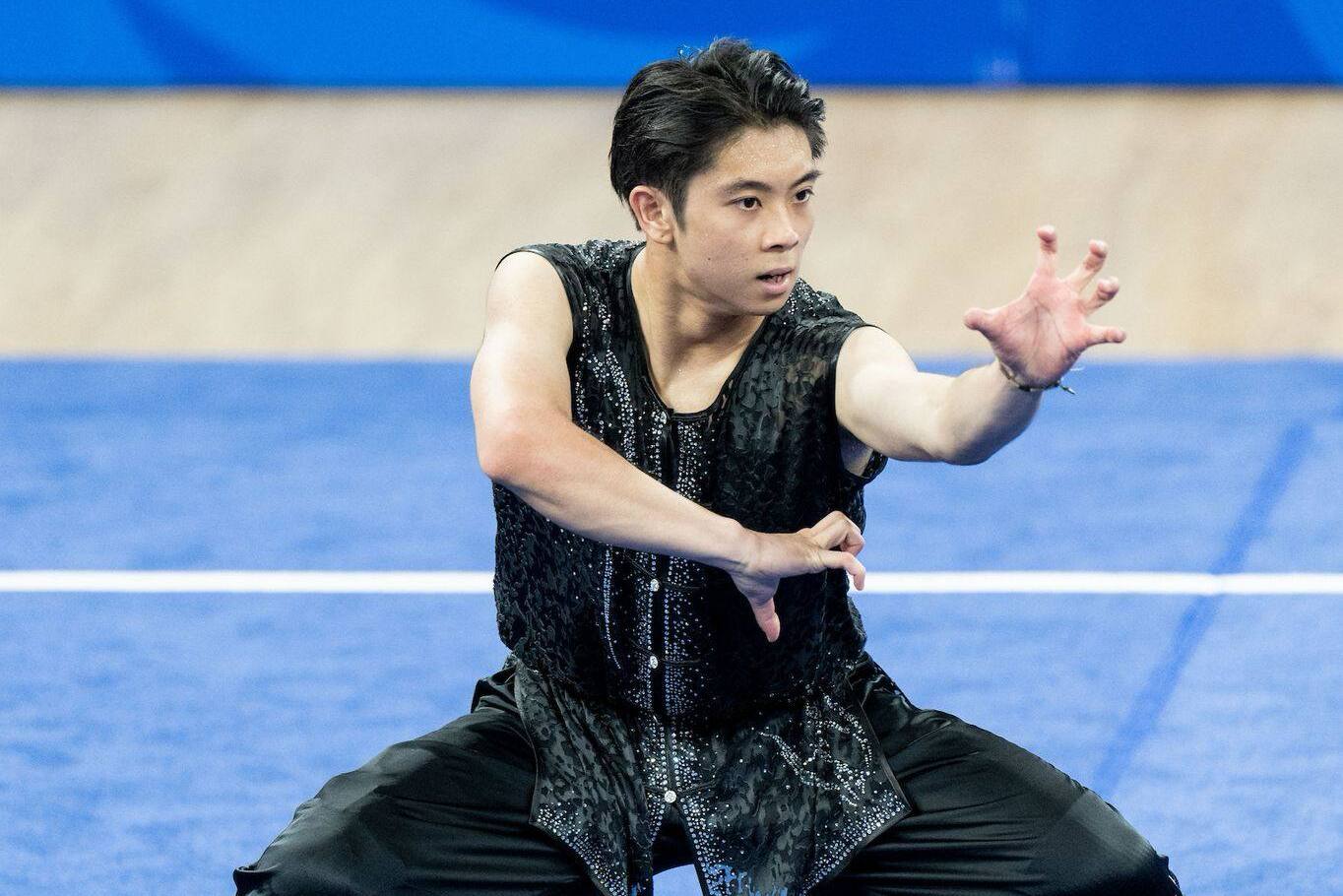
Every week, Talking Points gives you a worksheet to practise your reading comprehension with exercises about the story we’ve written.
While most people would associate martial arts with action-packed film scenes, violent yet elegant fights and agile combat, Hongkonger Lau Chi-lung is showing a different side of martial arts.
As a professional wushu athlete, 25-year-old Lau is making a name for himself globally. He recently won two gold medals and one silver medal at the World Wushu Championship, held from August 31 to September 7, in Brasília, Brazil.
Wushu is very different from the martial arts seen in Bruce Lee films. It is practised through forms or set routines, called taolu, and as a full-contact combat sport known as sanda.
Lau practices taolu, which means he does not fight another opponent. Instead, he performs a choreographed routine of movements and forms to score points with a judging panel. He may perform barehanded, nanquan, or with a short weapon, nandao. Performing with a long weapon is called nangun.
Lau said that wushu has taught him a number of important life skills.
“How do you face your coach, address your self-esteem? … Everyone has to perform and [receive] judgment and scoring or ranking. In the process, it’s very fun to learn how to do it better, plan your movements,” he said.
Rising in the ranks
Like many kids, Lau was introduced to martial arts through television and films. Intrigued, he began taking wushu classes around the age of 10.
Lau had never considered taking up other types of martial arts. He said he enjoyed the inherent “emotion” of the performative sport.
“I think it was very attractive for me,” he explained, describing a time when he saw an athlete “doing jumping skills, and then … lunge and scream”.
“I think the emotion and the feelings [made me think] … ‘Wow, I really like it.’”
Lau made the Hong Kong team at age 11. At this point, he was practising for around two and a half hours each day.
Now, he attends Baptist University through its full-time athlete programme, which allows students to graduate in eight years while pursuing their sport.
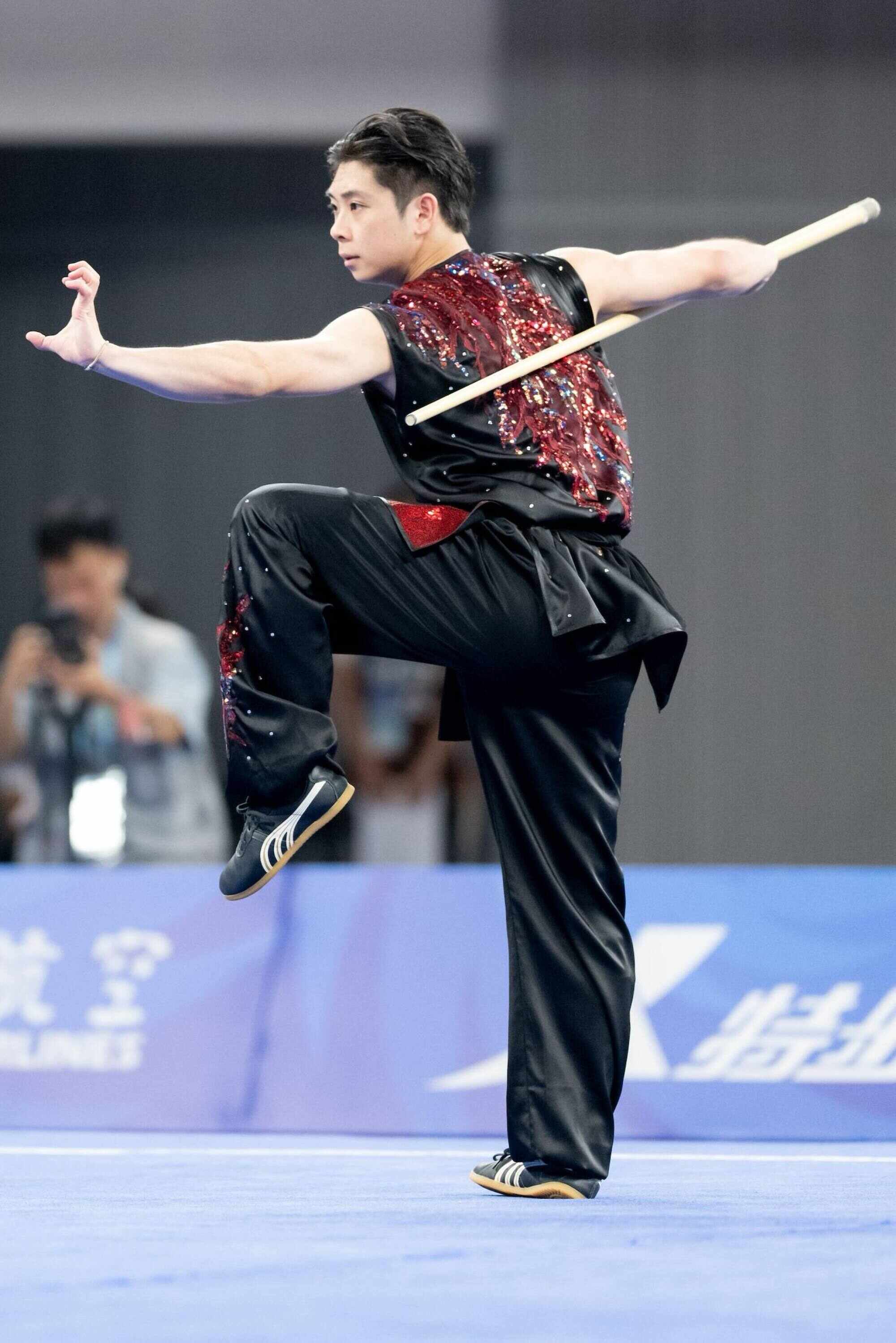
Full-time athletes at Baptist University train about 25 hours per week in addition to taking classes, so Lau is constantly bouncing between his lessons and practice.
Lau admitted that he finds it tough to balance school and wushu.
“We don’t have much time to do homework,” he said, explaining that he tried to find small bits of time to revise for exams and complete his assignments.
Lau’s hard work has paid off in recent years. He competed in the World Wushu Championships for the first time in 2019 in Shanghai, where he won a silver medal, then again in 2023 in the US, where he won a gold and bronze medal.
This year was his third and most successful appearance, as he took home two golds and a silver. Though his win came as a “surprise” to him because he was sick with a fever during the competition, he credits his success to being prepared.
“I have lots of experience [in global competitions]. I’ve learned how to manage my time, how to get warmed up, how to face a problem in an external situation,” he said.
“I’m very thankful that I’ve got great coaches to teach me, family supporting me and my teammates.”
Beyond the medals
Lau’s appreciation for the sport goes beyond the trophies. He understands the cultural and historical importance of wushu, given that it originated in China and some aspects have roots in southern China.
“Martial arts help me improve my skills and learn more about its history. Martial arts also helped me grow, especially my coach, [who] taught me knowledge, respect for teachers, attitude and how to treat others,” he said.
Although Lau has been successful in the wushu community, he believes the sport does not receive enough coverage or attention; for example, it isn’t included in the Olympics.
“We try to promote it, [but] not many parents will get interested in this kind of sport,” he said.
One encouraging sign for wushu’s future is its popularity in schools. Lau, a member of the Hong Kong Wushu Union, said principals regularly invite the group to perform on their campuses.
“Many local secondary schools and primary schools are supportive,” he said.