Advertisement
Chinese Foreign Minister’s Nepal visit puts Himalayan nation in headlights of big power rivalry in South Asia
- Wang Yi is expected to kick-start at least two Belt and Road Initiative projects after Nepal accepted a US$500 million infrastructure grant from Washington
- A 25-member bipartisan US Congressional delegation will visit in mid-April, aiming to show China and India just how serious Washington is about the region
4-MIN READ4-MIN
5

Nepal remains in the headlights of big power rivalry in South Asia with Chinese Foreign Minister Wang Yi in Kathmandu for talks and a heavyweight US Congressional delegation expected to arrive three weeks later.
Wang’s weekend visit, the last stop on a swing through South Asia, will mark the first high-level engagement between the two countries since the impoverished Himalayan nation last month approved a US$500-million grant from Washington, defying China’s calls to reject the package.
The lawmakers’ consent to the US deal to modernise roads and build desperately needed high-voltage power lines was seen by foreign-policy watchers as a major rebuff to China, whose influence in the politically volatile democracy has grown considerably in recent years.
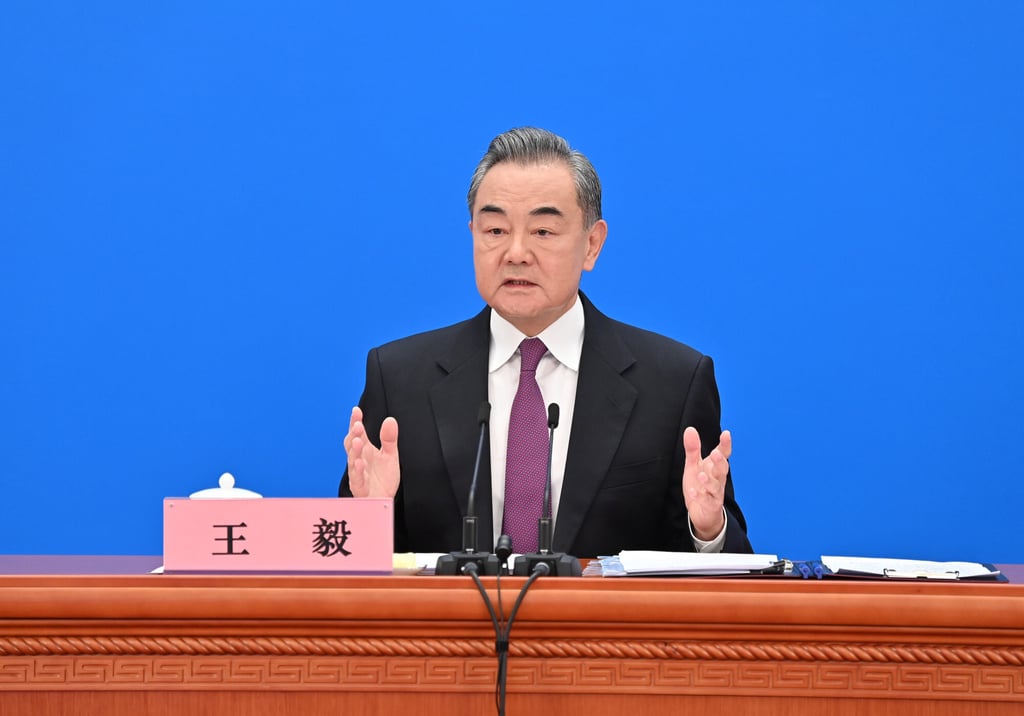
Even if the Chinese failed to stop the pact’s ratification, they have one consolation. “They’ve been successful at gaslighting anti-American sentiment here, and that sentiment won’t go away quickly,” said Santosh Sharma Poudel, co-founder of the Nepal Institute for Policy Research.
The decision to accept the money offered by the Millennium Corporation Challenge (MCC), a US foreign aid agency set up by Congress in 2004, came a day before America’s take-it-or-leave-it end of February deadline.
Select Voice
Select Speed
1x
AI-generated voice