Retail investors eye new private market prospects in Hong Kong
Unlocking alternative assets offers diversification and higher returns, but access and education gaps remain

Despite their exclusive-sounding name, private markets represent more than 80 per cent of the global economy. Individual investors hold about half of all wealth globally, but only a fraction of that is invested in private markets. Unlock even some of those private markets to allow the other half access to that four-fifths of the economy and the effect could be huge.
Growing demand, technological improvements and cautious regulatory reforms are all helping speed this process. McKinsey estimates the value of retail alternative products managed in Hong Kong was about US$100 billion in 2024, and is likely to see double-digit growth until 2028.
“Flows have been very strong but we would still describe this as early innings,” says Christian Bucaro, head of Wealth Asia at Franklin Templeton. “Retail investors remain meaningfully under-allocated to private markets compared with institutional investors, so we see substantial room for growth as awareness, education and access continue to improve.”

There are a number of possible advantages in all this for retail investors. Private markets frequently offer higher long-term returns than their publicly listed counterparts. They also provide crucial portfolio diversification – often behaving very differently to public investments when it comes to returns.
“Private markets have long played an integral role in institutional portfolios,” says Bucaro, “[addressing] needs across the spectrum – downside protection, higher returns, volatility dampening and stable income. These needs are as relevant for retail investors and there is no reason for this segment to be excluded.”
The changing regulatory appetite is shown by the emergence of vehicles such as the EU’s ELTIFs (European long-term investment funds) and the UK’s LTAFs (long-term asset funds).
The US has signalled its interest in creating a framework to allow this kind of investment, while in June, Hong Kong’s Securities and Futures Commission (SFC) issued a paper proposing retail access to private markets by amending the Code on Unit Trusts and Mutual Funds.
One key challenge, however, is structuring investments that meet the demands of a wide range of investors across a wide range of asset classes. “Historically, the main barriers have been the lack of appropriate structures, education and access points for wealth investors,” says Bucaro. There are no exchanges, and assets aren’t offered in a way that makes it easy for private clients to invest in them.
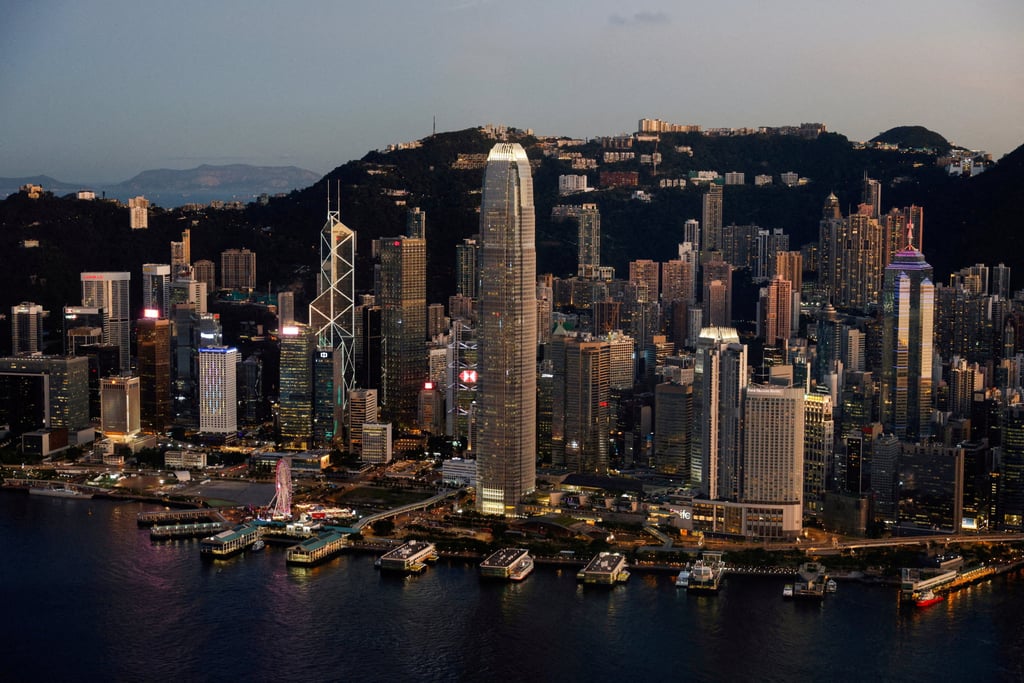
Feeder fund structures are currently the most common way of resolving this in Asia. These structures dramatically lower the minimum investment to about US$100,000-US$150,000, but with “professional investors” in Hong Kong required to hold at least HK$8 million in investible assets, many will still be excluded. Retail investors, moreover, are used to levels of liquidity and reporting that private markets are not set up to offer.
“The idea of the average Joe investing in these private markets in theory makes perfect sense,” says Alberto Moel, professor of practice in finance at the University of Hong Kong.
“Having said that, it’s a trade-off. Public markets provide liquidity and information. Private markets only report occasionally and sometimes not at all. And your return comes from the fact that you’ve given up liquidity. This is allowed because it’s supposed to be for ‘smart’ investors; it needs to be changed for less sophisticated investors.”
A key issue, says Matthew Phillips, financial services industry leader for PwC China, is that intermediaries will need to start talking to vastly larger numbers of investors than they’re used to. “Most managers have developed reporting structures in the institutional investment world. They’re able to have face-to-face meetings with their clients. They’re geared up for quarterly reporting. They don’t have the same ability or same infrastructure to reach out to retail clients. Many intermediaries struggle to share information in a consistent way.”
We see substantial room for growth as awareness, education and access continue to improve
That can create problems because of the opaque nature of the assets, adds Xiyuan Fang, partner at McKinsey & Company. “There is limited transparency about the underlying assets of most private market products, which is a potential risk.”
That puts the onus on the intermediaries who will educate retail clients, explaining an environment that many of those investors won’t be familiar with, which places a particular emphasis on setting expectations from the start.
“Education is critical,” explains Franklin Templeton’s Bucaro. “Private markets are different from traditional public market products, and investors need to understand the role these assets can play in a portfolio – the risks involved, the time horizon and the liquidity profile.”