Hong Kong educators are encouraged to move beyond traditional assessments and focus on cultivating creativity, integrity and authenticity to prepare students for an AI-driven future, university leaders told a forum on Tuesday.
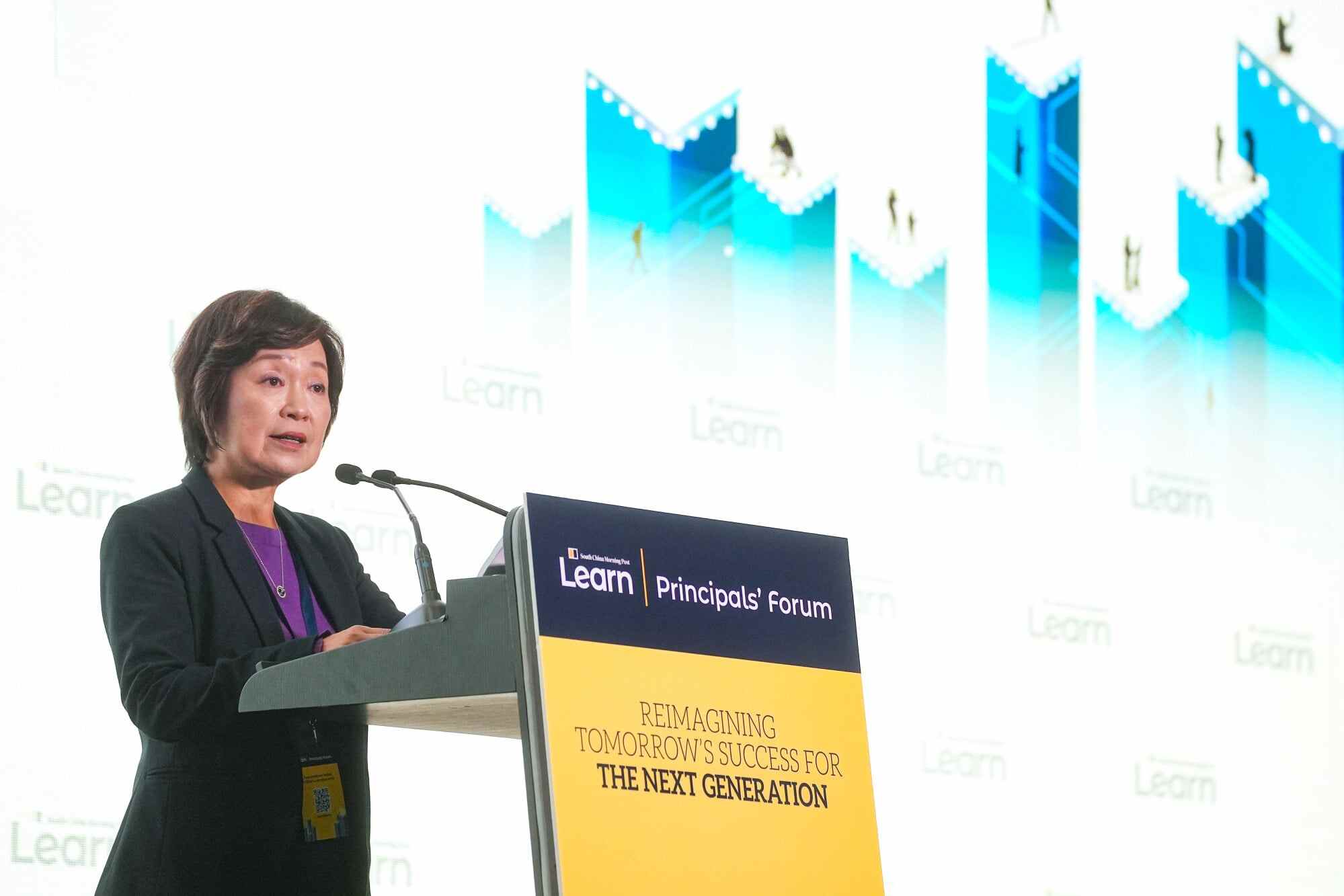
Speaking at the fourth annual Hong Kong Principals’ Forum, organised by the South China Morning Post, experts agreed that while technology evolves, the core human values required for success remain unchanged.
The event, themed “Reimagining Tomorrow’s Success for the Next Generation”, brought together around 300 primary and secondary school heads from across the Greater Bay Area to exchange insights on the future of education.
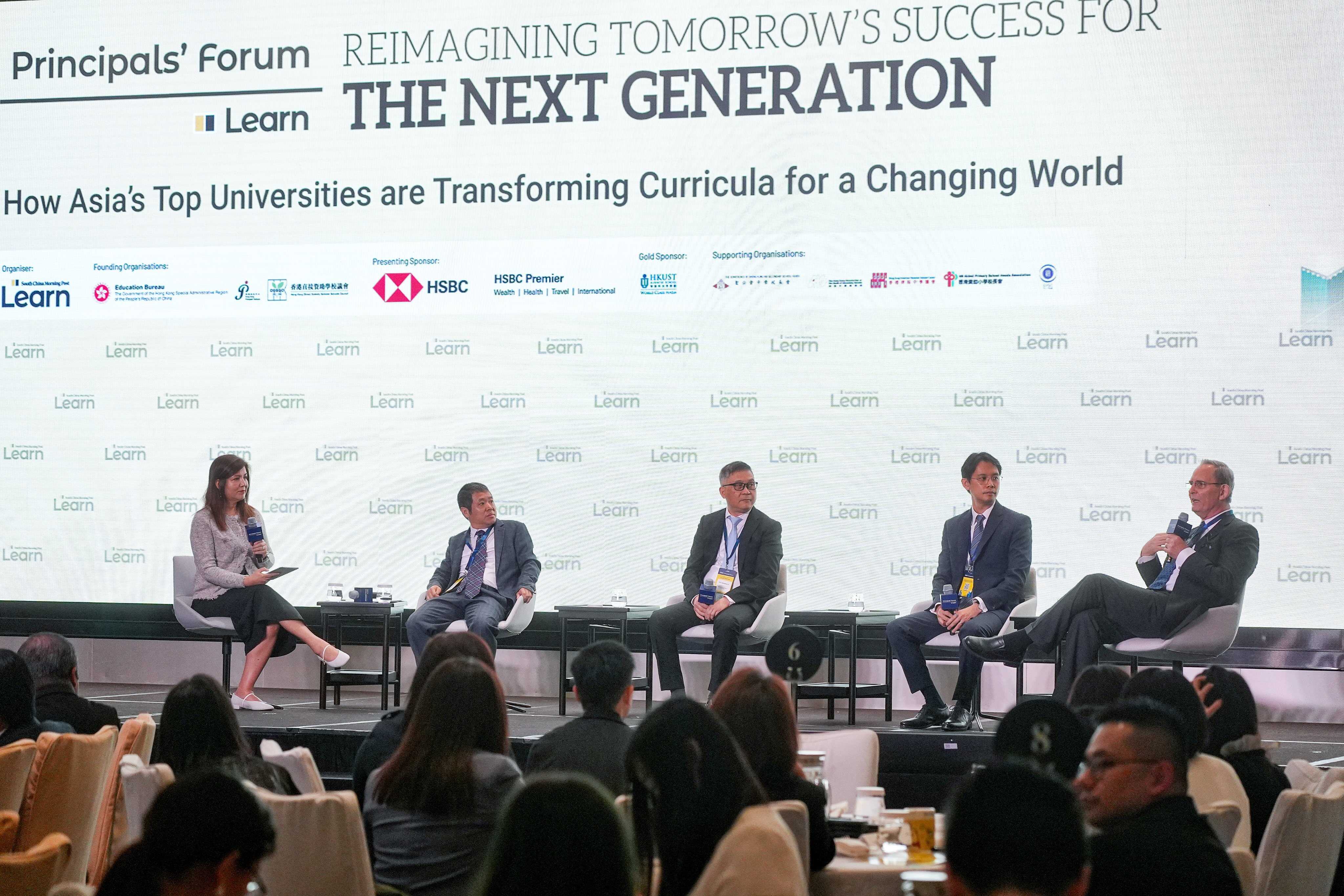
One panel discussed how Asia’s top universities are transforming curricula for a changing world.
The vice presidents and deans from Peking University, the University of Hong Kong (HKU), the Hong Kong University of Science and Technology (HKUST), and the Education University of Hong Kong (EdU) shared how academics can equip students for a rapidly changing future.
Professor Jay Siegel, vice-president and pro-vice-chancellor (teaching and learning) at HKU, encouraged the audience to rethink the structure of education. He suggested that if society wants “creative and meaningful humans”, schools must stop prioritising administrative convenience over personal excellence.
“Maybe now we need to be thinking about forgetting about classrooms. Maybe we need to stop having credited classes,” Siegel said. “I’m hoping ... we’re going to, in fact, get rid of all of these types of systems because what we want is team performance. What we want is personal excellence.”
Siegel used the example of a piano performance to illustrate his point: an audience is moved by the artistry and involvement of the human being, not the grades the pianist achieved in music theory, he said.
He emphasised the “4 Cs” – create, critique, curate and communicate – and warned that without inherent integrity, no assessment method matters.
“If our students want to cheat ... because we don’t believe that we have a society of people who are authentic ... then all of these assessments don’t make any difference at all,” he said.
Professor Wang Pengfei, dean of the Peking University HSBC Business School, used a martial arts analogy to describe the ideal student.
He likened technical skills to physical moves and critical thinking to “internal force”.
“If they can work together, then they can almost beat everybody,” Wang said. He added that, in an age where technology makes answers abundant, the ability to ask the right questions has become a more valuable skill.
Professor Koh Tat Koon from HKUST said that domain expertise remains a fundamental requirement alongside these broader competencies.
“You can’t just focus on the soft skills without having some level of domain expertise,” said Koh, HKUST’s associate dean of business and management.
“To make sense of what you are seeing, you need knowledge as well as the soft skills.”
Professor Xu Guandong, assistant vice-president (artificial intelligence and education innovation) at EdU, rounded out the discussion by listing the “genetic skills” essential for the future regardless of a student’s chosen major, such as critical thinking, problem-solving, social resilience and ethical decision-making.
Another panel at the event included global tech leaders from Google, IBM and Microsoft, who discussed the latest AI adoption and technology-driven changes in the education sector.
HSBC Premier was the presenting sponsor of the forum, with HKUST Business School acting as the gold sponsor. The Education Bureau, the Hong Kong Principals’ Institute and the Hong Kong Direct Subsidy Scheme Schools Council served as founding organisations.