Generations of craftsmanship: the legacy of a Hong Kong cleaver store
Leung Hung, owner of Sham Shui Po’s Leung Tim Choppers Factory, reflects on being a third-generation knife-maker and why he’s OK with traditions fading away

I WAS BORN in Tsan Yuk Hospital, in Sai Ying Pun, in 1967. My mum was born in Hong Kong and my dad had been in the city for a long time by then. My dad, Leung Tim, opened the cleaver store before I was born. I’ve been the store supervisor since my dad passed away 10 years ago, but he is still the boss.
MY GRANDPA was a knife-maker and taught my dad the craft. My dad opened this store because knife-making was the only thing he knew how to do. He opened his first shop in Sham Shui Po’s Pei Ho Street Market in the 1960s. It was very small. In the 70s, the business was doing great, so we moved to this location on Cheung Sha Wan Road. We live upstairs from the shop, and the floors were originally connected. Due to regulations, however, we had to separate the units.
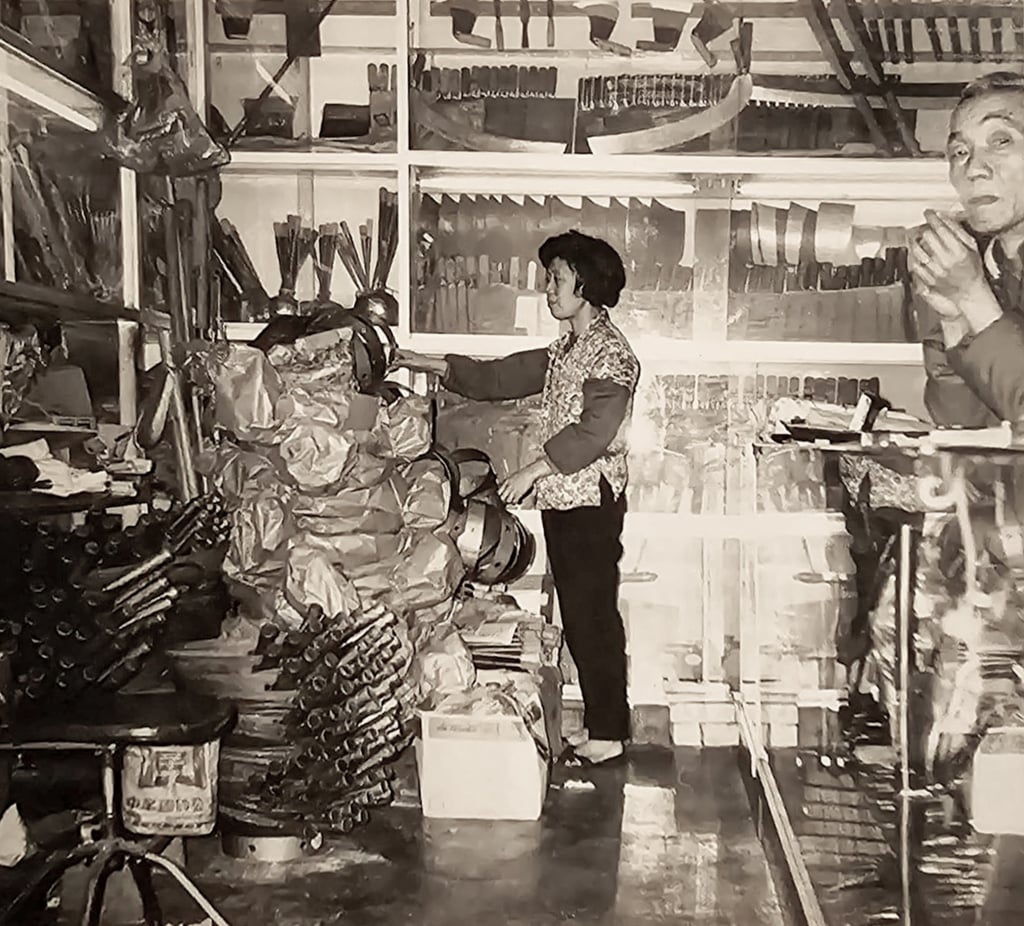
DURING MY grandpa’s time, the knives were handmade. Knife masters would heat the metal, manage the fire, move it back and forth to the furnace and repeat the process over and over. It was incredibly labour-intensive. Every step required a specialised focus; it wasn’t just one person doing everything – different people handled different parts and processes, and you couldn’t skip a single step.
MACHINES TOOK over in the 70s. But you still need people to add the final touches. When the knives arrive from our factory in mainland China, the blades are still dull. We have to get knife-sharpening sifus in Hong Kong to sharpen them. Back then, the shop was really busy. We would start work at 9am and finish at 1am. There are so many steps to get the knives ready; we had to process, handle and package the products.