RecapChina’s religious history features Christianity, Judaism and Islam … and a cult that sparked bloody civil war
Traditional Asian beliefs and Abrahamic religions have existed in China for centuries, columnist Wee Kek Koon looks at their impact

Here are five pieces from Post Magazine’s long-running column Reflections by Wee Kek Koon that look at the Chinese Bible’s impact on Mandarin, the forgotten Kaifeng Jews, the journey of Islam in China and how one Hong Xiuquan, who thought he was Jesus Christ’s brother, started the Taiping Rebellion.
1. When a man calling himself Jesus’ brother led the Taiping Rebellion, which saw 20 million Chinese die and doomed the Qing dynasty
Read the fascinating tale of Hong Xiuquan, who claimed to be Jesus Christ’s younger brother, sparking the Taiping Rebellion that hastened the downfall of the Qing dynasty. His religious movement, born from failed exams and divine visions, resulted in millions of deaths in the bloodiest of civil wars.
2. Why can China’s Buddhists, Taoists and Confucians get along, yet the world’s Christians, Muslims and Jews cannot?
Explore the harmonious coexistence of Buddhism, Taoism and Confucianism in China, and how it contrasts with the historical conflicts among Abrahamic faiths. The non-dogmatic nature of Chinese belief systems, which foster inclusivity and syncretism, suggests something can be learned from their approach to religious tolerance and coexistence.
3. Unveiling the Chinese Bible: how it was translated and the long-lasting impact it had on the Mandarin language
The Chinese Union Version of the Bible introduced biblical phrases like “sacrificial lamb” and “a tooth for a tooth” into the Chinese language. Christian translators consulted ancient Greek texts and English editions to create a version for Chinese readers, shaping linguistic and cultural landscapes.
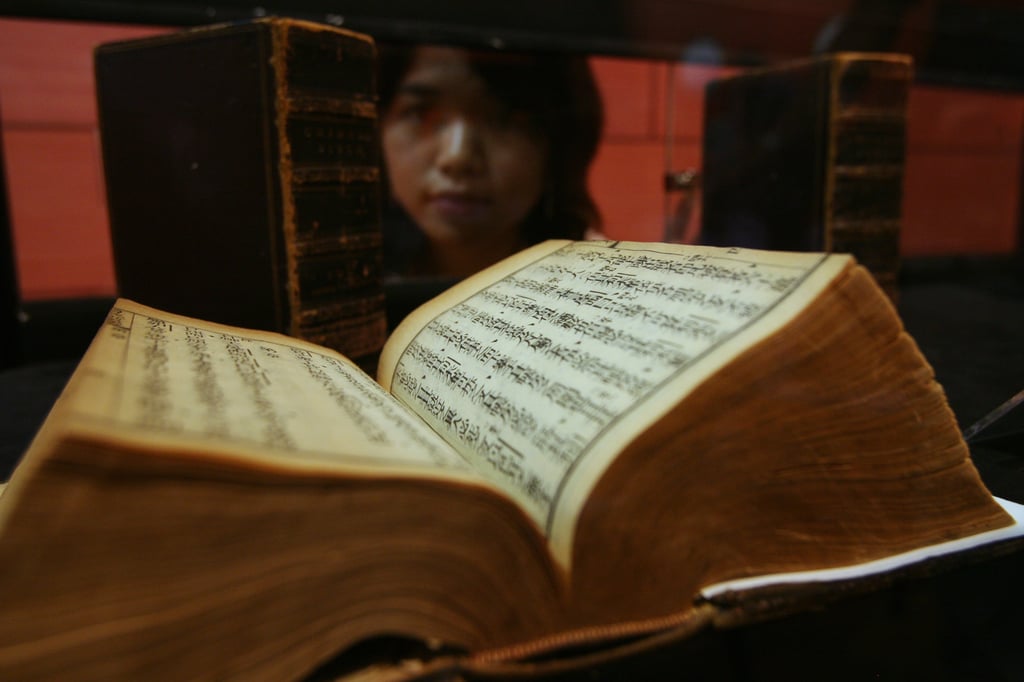
4. The forgotten heritage of China’s Kaifeng Jews and the mysterious history of the ‘religion that pulls out the sinews’
The Kaifeng Jewish community in Henan province has existed for centuries, yet remains largely forgotten. Their story dates back to the Song dynasty and a synagogue that was built in 1163, and now, despite assimilation into Chinese culture, some descendants want to learn about their heritage.
5. The history of Islam in China, from the Tang dynasty to Hui Muslims in Guangzhou and beyond – including a moment of prominence
Follow the journey of Islam in China, from its arrival in the 600s via Middle Eastern trade routes to its brief prominence during the Yuan dynasty. Muslim communities thrived in coastal cities like Guangzhou and integrated during the Ming dynasty, leading to the emergence of the Hui people.
Part of this article was produced with the assistance of generative AI