The end of Hong Kong’s golden age marked the start of her success
Artist Jaffa Lam’s practice describes a dynamic arc – like Hong Kong’s art scene itself – moving beyond cultural tradition to embrace the everyday and individual
Jaffa Lam Laam’s story of her childhood as a new immigrant in Hong Kong, and how she came to be represented by a major international gallery, has dramatic turning points. Underpinned by an unwavering self-belief, her tale elucidates Hong Kong’s perforated relationship with mainland China, the dynamics behind its own art history, the impact of the international art market and, most of all, that there is no linear Hong Kong narrative.
Lam was born in 1973 in Fujian province, southern China, while Mao Zedong’s Great Proletarian Cultural Revolution was still raging. She was given the Chinese first name Laam, which means mountain mist, but she never had the luxury of living with her head in the clouds. Lam’s mother brought her and her sister to Hong Kong in 1985, initially to reunite with their father, who had moved earlier to the British colony. But the years of separation had taken a toll on the marriage, so Lam, her elder sister and her mother ended up living on their own, and were soon plunged into poverty.
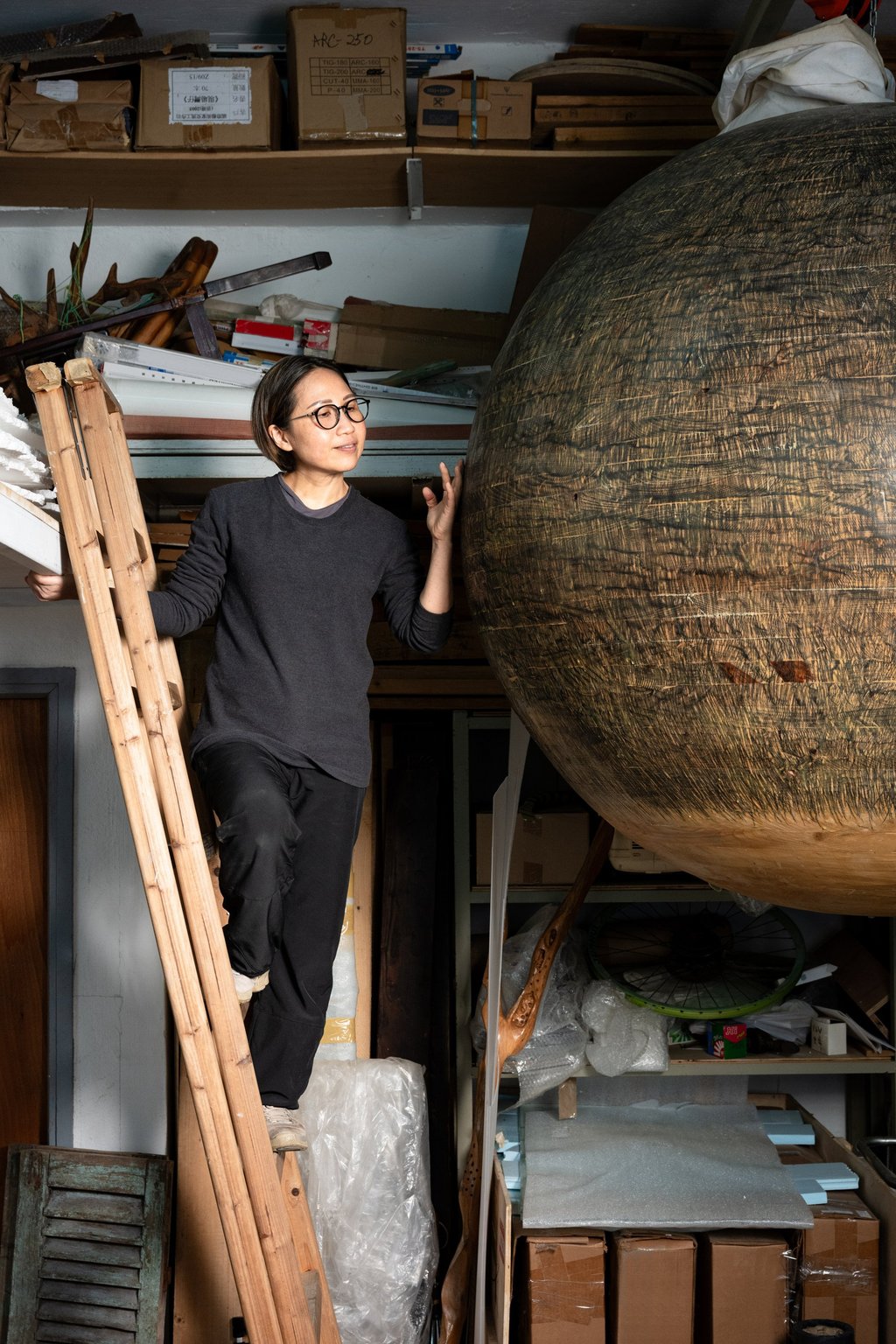
Jaffa Lam poses with one of her installation works at her studio. Photo: Eugene Chan
Hong Kong in 1985 was just coming to terms with the fact that Britain was planning to hand it over to Communist China in 1997, after ruling it since 1842. But the economy was remarkably resilient, bolstered by Beijing’s promise that Hong Kong could keep its capitalist ways, retain its civic freedoms and enjoy a high degree of autonomy. As immigrants from China, Lam’s family had to adapt to a completely different way of life, a different way of writing Chinese (traditional rather than simplified), a different way of speaking (Cantonese rather than Mandarin) and, in a city where they could only afford to rent a tiny rooftop shack, a different class system altogether.
Art was not so much an escape as a means to help out the household budget. “I had taken art lessons in China so I was quite a good art student compared with my local classmates,” says Lam. “I kept winning school prizes – textbook vouchers, usually, which were really helpful. That’s how I came to think of art as a means of making a living.”
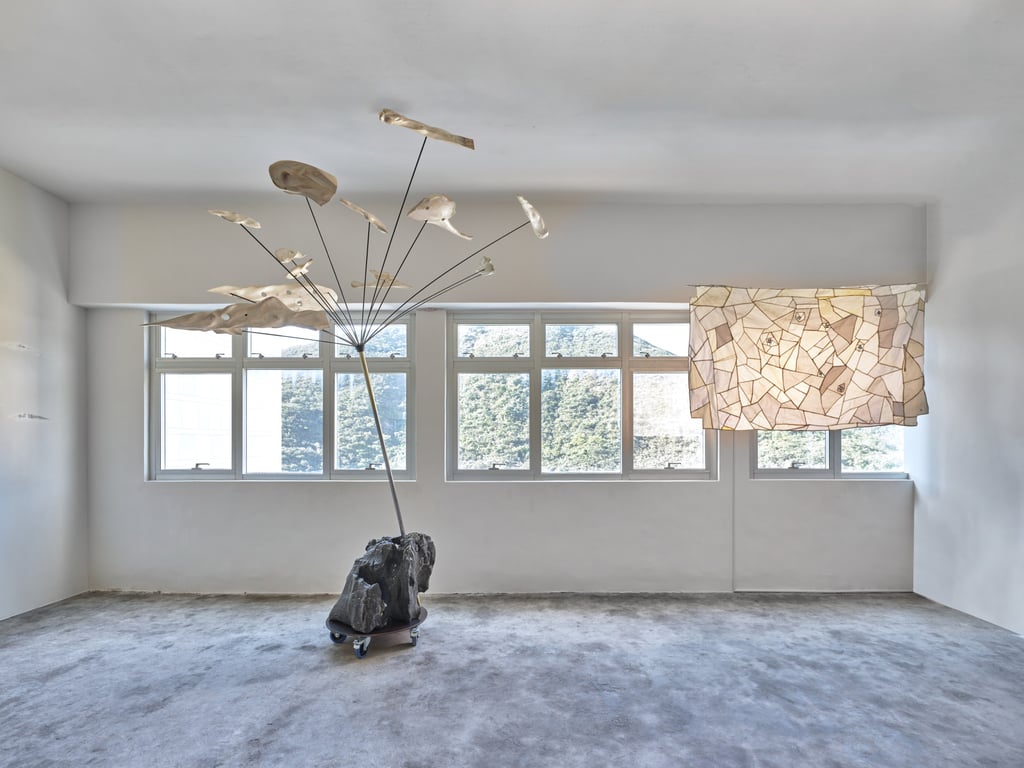
Somersault Cloud (2022), left, incorporates materials recycled from Lam’s past works. Starry Day (2015/2022), right, was originally stretched on a canvas in previous exhibitions. Photo: courtesy of Axel Vervoordt Gallery
Lam’s exemplary skills in drawing and calligraphy won her admission to Hong Kong’s only fine-art tertiary programme then, at the Chinese University of Hong Kong (CUHK), where she intended to focus on Chinese calligraphy under the school’s many eminent ink masters. “I thought of myself as an inheritor of China’s literati tradition,” she recalls. “I had no idea about Western art history or contemporary art.”
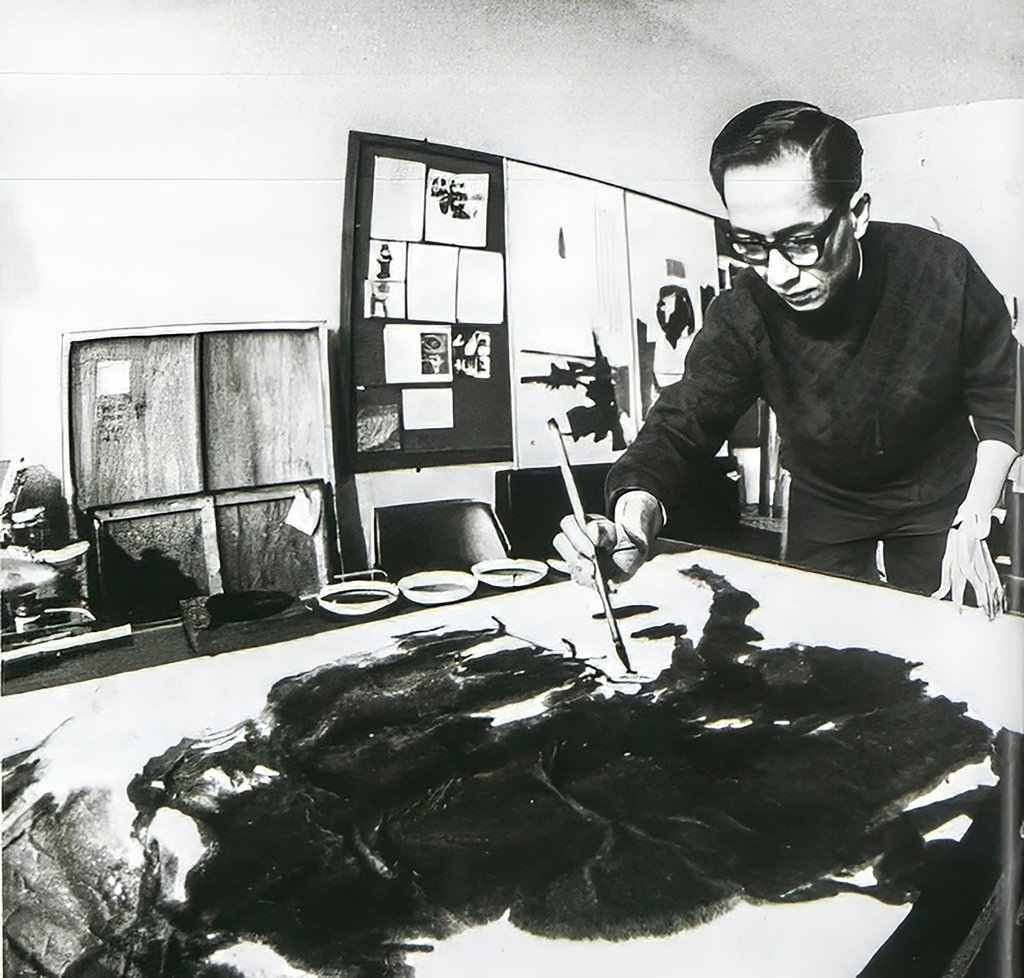
Painter Lui Shou-kwan. Photo: Handout
Lam discovered that her attitude and world view were out of tune with her locally educated classmates, who did not identify as closely with traditional Chinese culture, and says she thought she had more in common with a proud lineage of Chinese artists and intellectuals who moved to the city during periods of great turmoil on the mainland. Hong Kong was a haven for eminent sinologists and philosophers such as Ch’ien Mu and Jao Tsung-i, who moved to the then British colony when the Communists took control of China in 1949. Later, the influx of talent fleeing the Cultural Revolution resulted in a golden age of the arts. Among those who decamped to the city were painters such as Lui Shou-kwan and his cohort, who pioneered the New Ink Painting Movement in the 1960s and 70s in Hong Kong, injecting fresh vigour into a traditional Chinese art genre by amalgamating elements of Western abstract art. This mirrored the cross-cultural fertilisation between Zen Buddhism and abstract expressionists working in the United States in the same period.
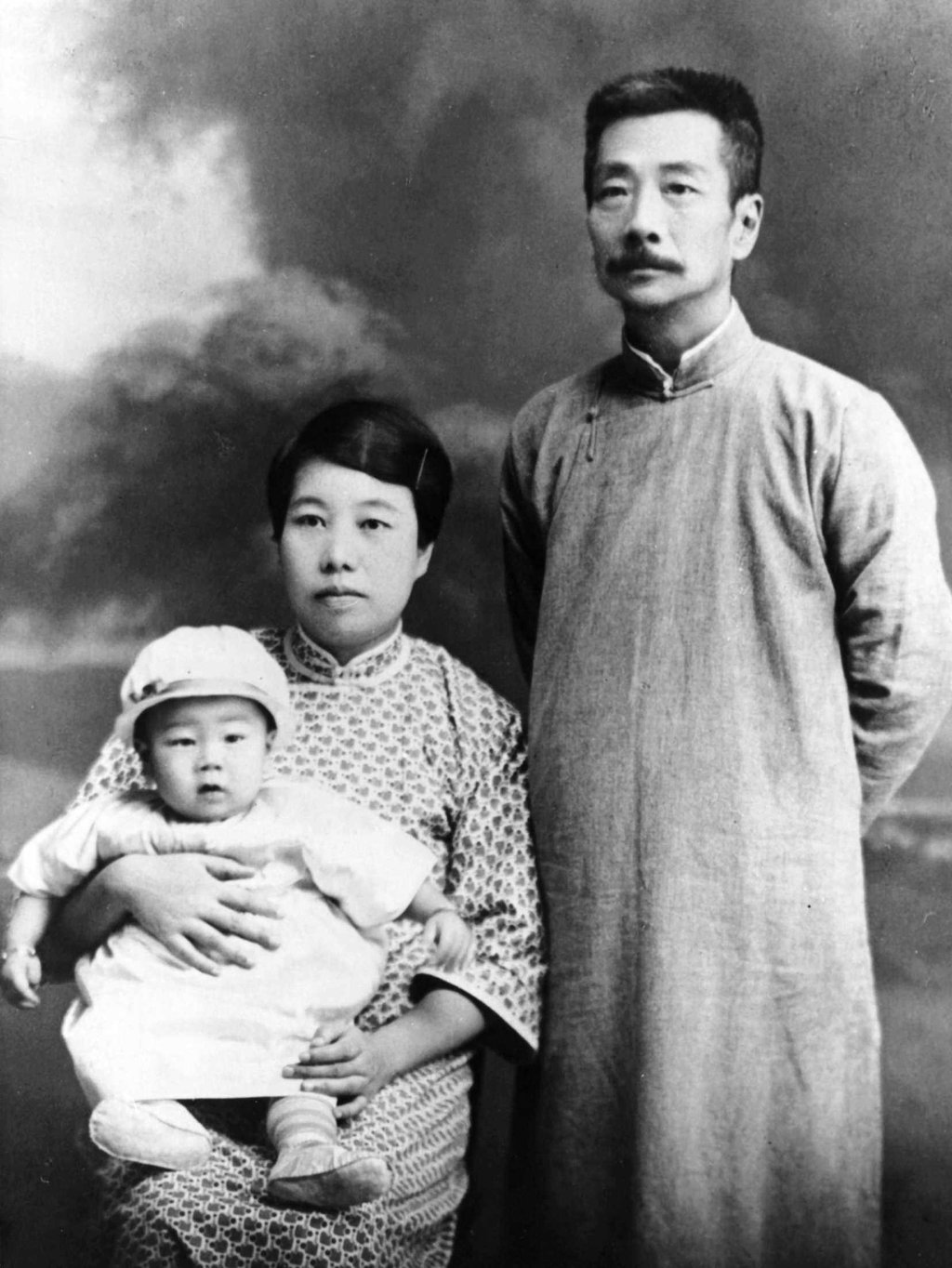
Author Lu Xun with his wife Xu Guangping and their child, pictured in 1930. Photo: Xinhua
The impact of the émigré artists, writers and intellectuals was so great that Hong Kong developed an inferiority complex about the value of its own culture, one that continues to torment the city from time to time. The contemporary novelist John Chan Koon-chung has traced the earliest record of the phrase of Hong Kong being “a cultural desert” to a 1920s article by Lu Xun. By writing “Hong Kong is not a cultural desert”, one of the greatest writers of the 20th century condemned the city to being called one for generations to come, Chan claims.
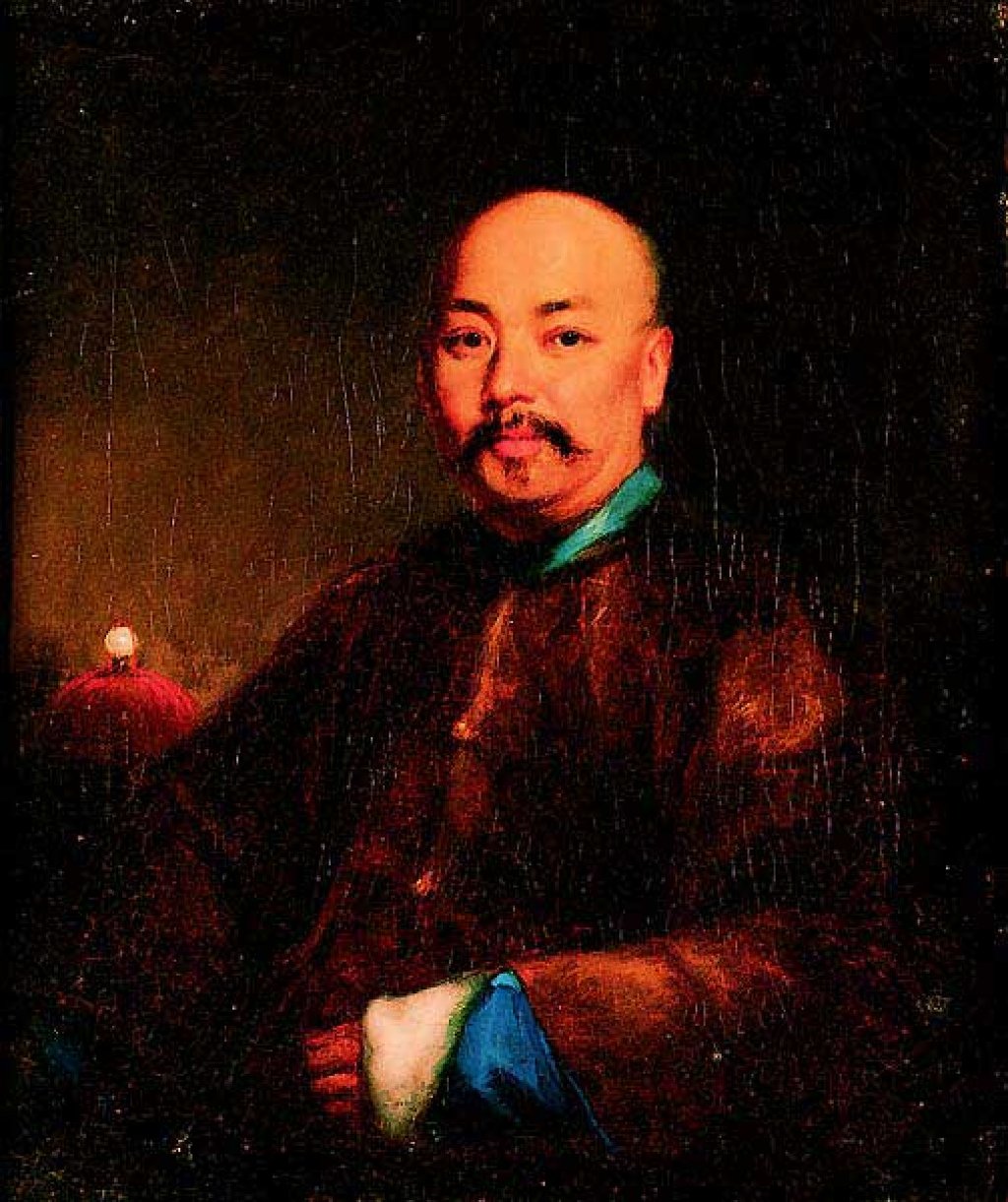
Lamqua (Guan Zuolin) in a self-portrait in 1853. Photo: Handout
One enduring misconception is that Hong Kong had no art before the 1960s, in spite of plenty of evidence showing otherwise. The 19th century Chinese artist Lamqua, inspired by the master of trade art George Chinnery and who exhibited at the Royal Academy in London twice, set up a thriving commercial studio in Hong Kong just after the British arrived in 1842. An early wave of immigrant artists arrived in the 1930s, including overseas Chinese trained in Western art schools such as Li Tiefu and Li Bing.
But the 1960s did draw many artists from far and wide as Hong Kong’s economy began to take off. Painters such as Douglas Bland, Rosamond Brown and Brian Tilbrook (who is still active as an artist and lives on Lamma Island) fused elements from their new and old lives while keeping to Western materials and techniques. Another group, made up of largely ethnic Chinese artists who grew up in Hong Kong and learned both Chinese and Western techniques, gradually developed their own independent visual languages. This group, comprising artists such as Luis Chan, Hon Chi-fun, Irene Chou and Cheung Yee, was at the heart of the “boisterous art decade” described by British art critic Nigel Cameron when he moved to Hong Kong in the 60s. Regardless of their birthplace, these artists were exhibiting as “Hong Kong artists” internationally by the 60s.