Difficulty: Explorer (Level 1)
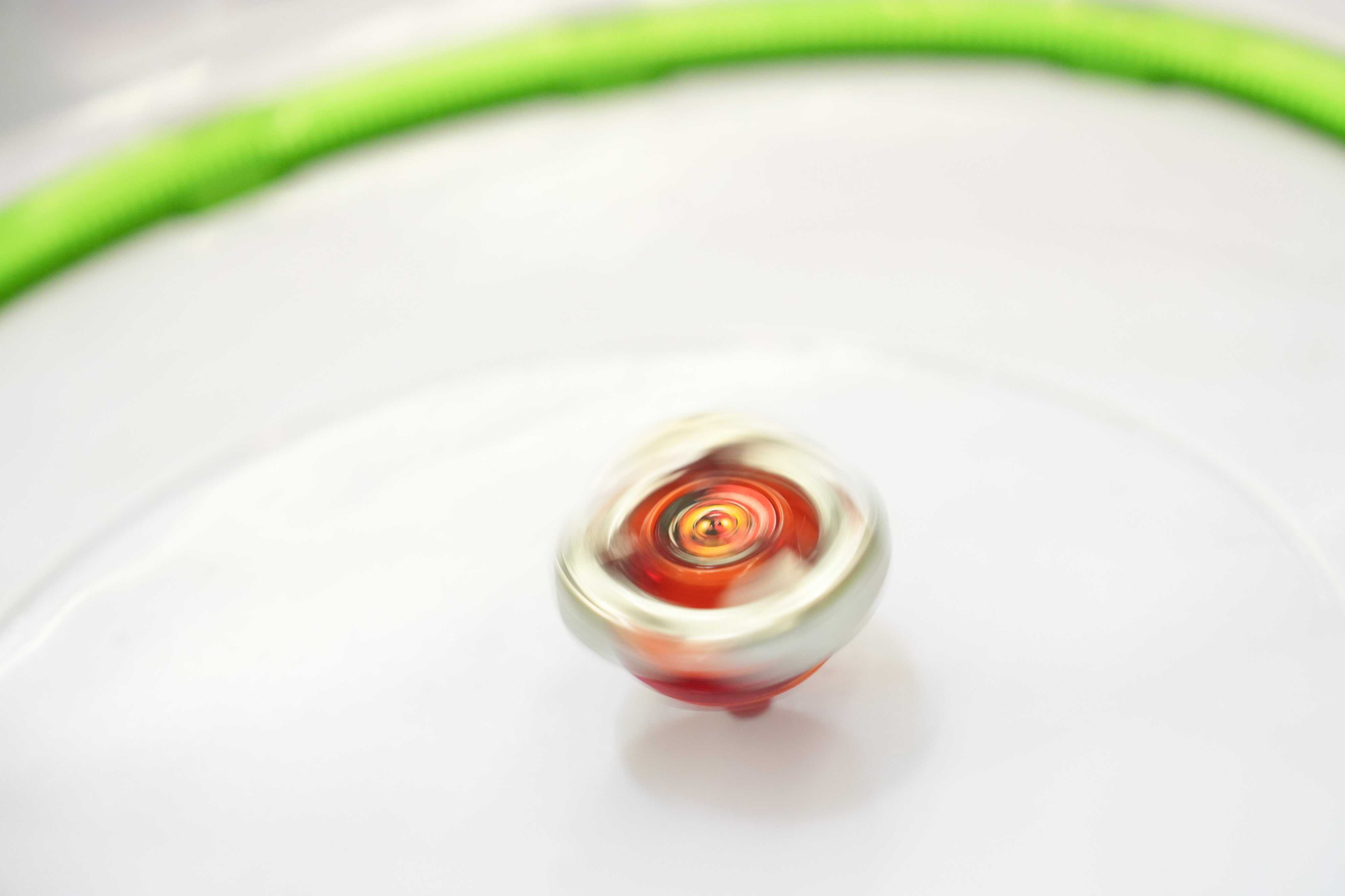
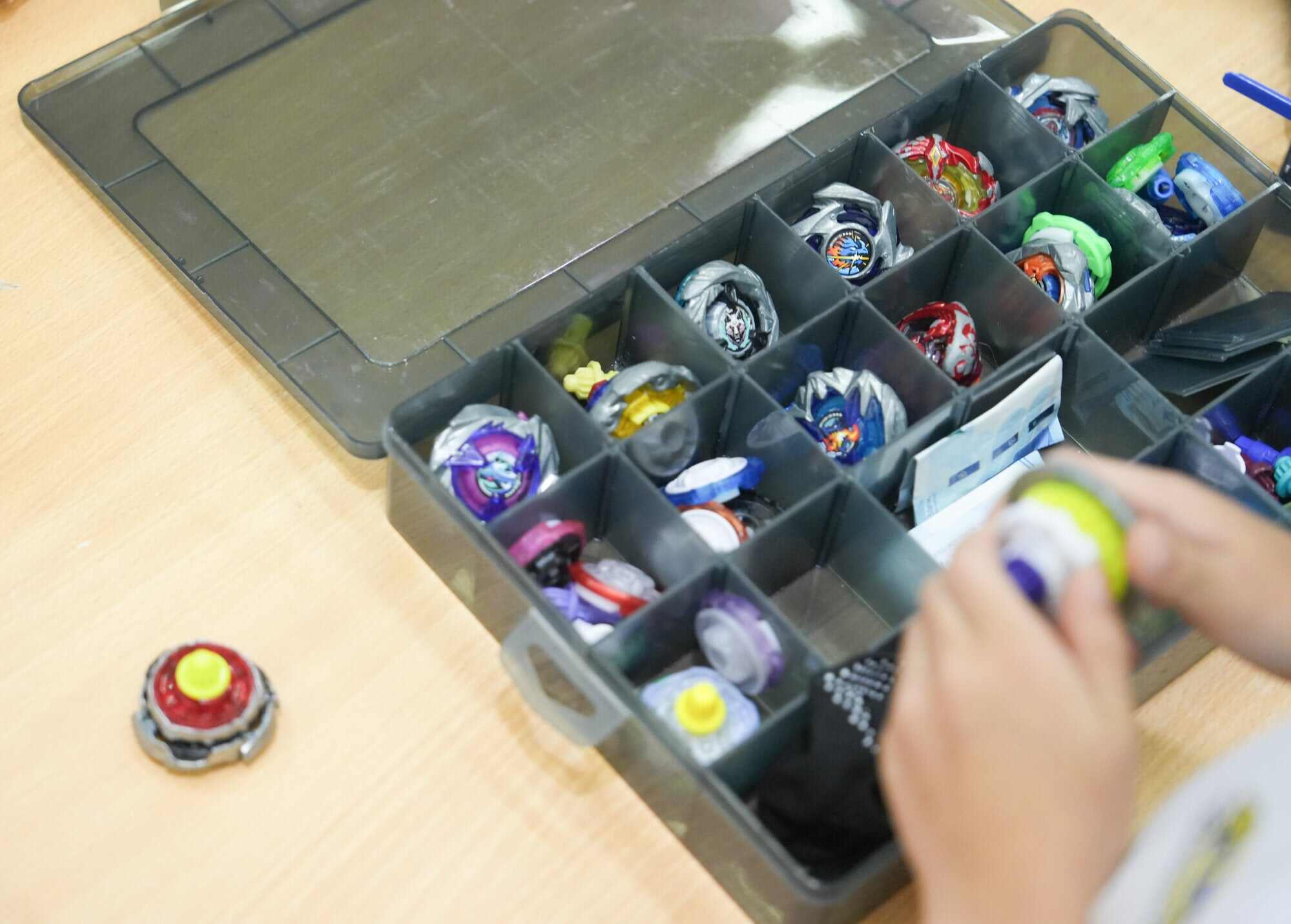
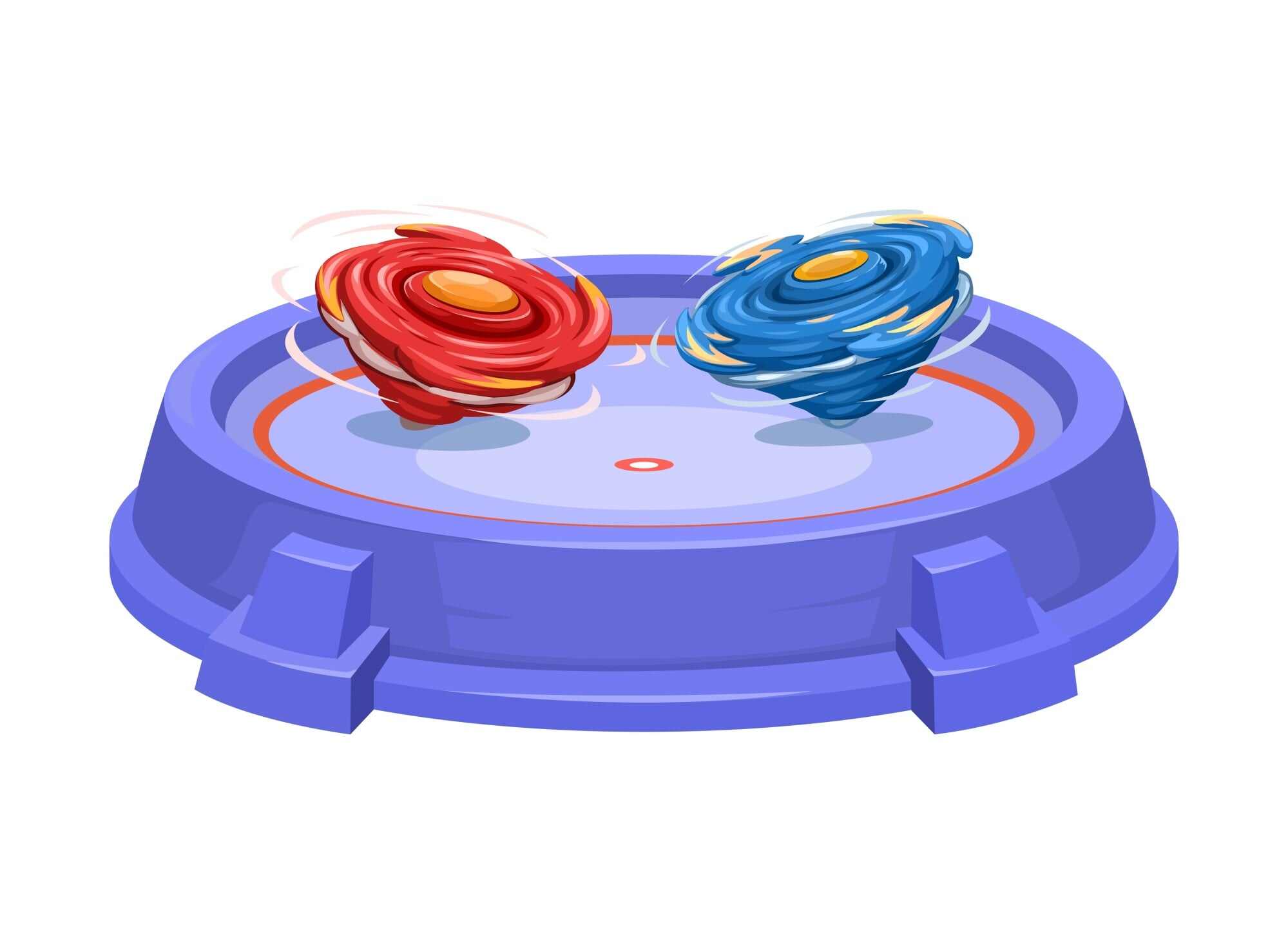
Beyblades are all the rage. Before your next battle spins out of control, see what you can learn about friction through this toy. Friction is the force that stops an object from moving freely on a surface.
To maximise your chances of winning, let’s take a closer look at the friction in different home environments. You can also make your own version of the popular top!
Make your own top
Materials
-
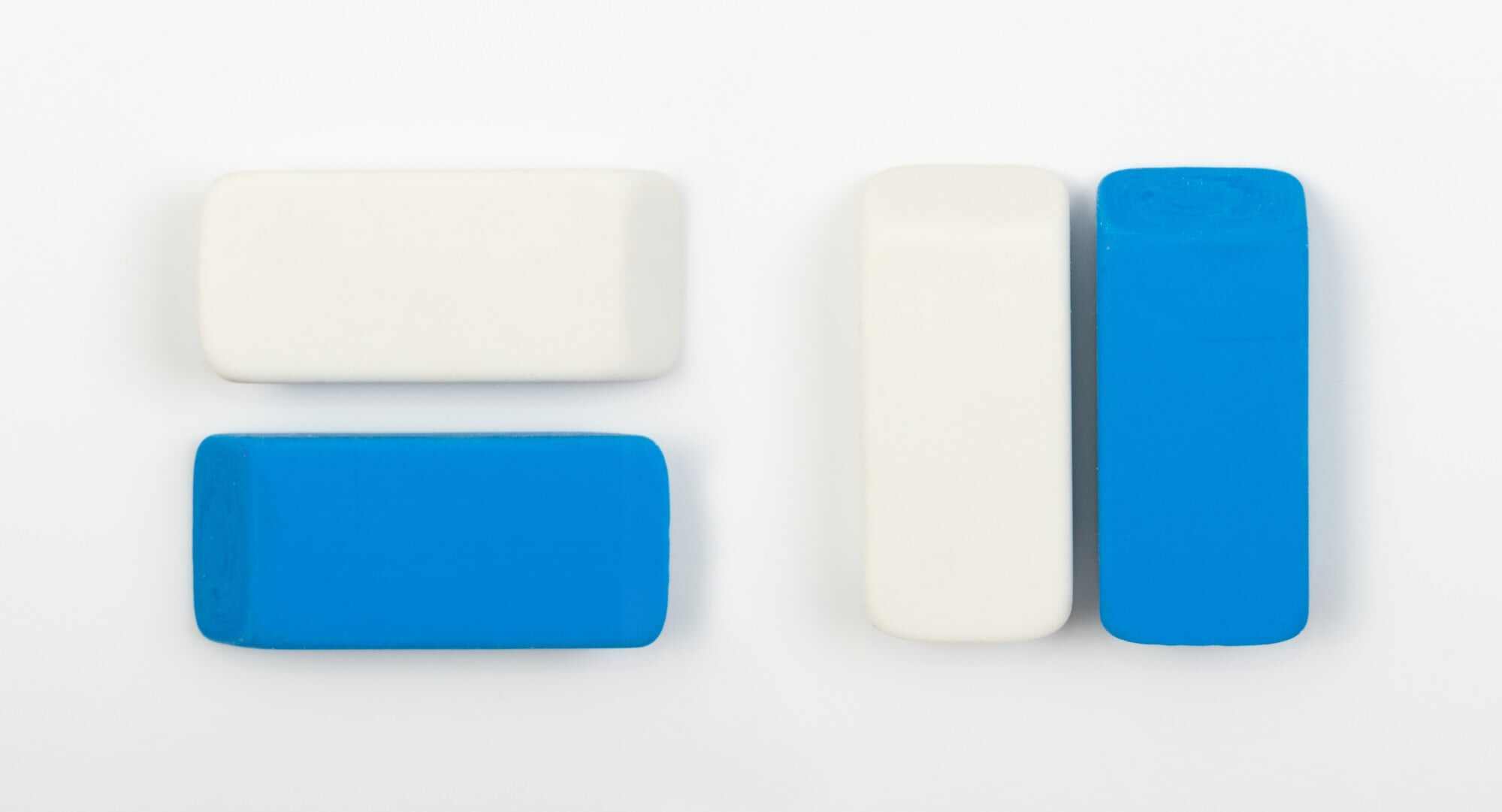
large rubber eraser (at least 4-5cm in diameter and no more than 1cm in height)
-
drawing compass
-
marker
-
ruler
-
craft knife or scissors (with help from an adult)
-
drawing pin or push pin (at least 1.5-2cm long)
-
glue (optional)
-
coloured markers (optional)
Instructions
-
Start by creating the base of the top. It must be a perfect circle. Using the compass, draw a circle on the eraser that measures at least 4-5cm from end to end. Then, trace over the circle with a marker.
-
Ask an adult to help you cut the eraser along the line with a knife or scissors. Ensure that the surface is even and round. This is your top’s base.
-
Find the spot where you had placed the point of the compass. This is the centre of your circle. Force the pushpin through the spot. Make sure the needle goes through to the other side, but be careful not to poke yourself.
-
Test your home-made Beyblade using the pushpin’s head as a handle. If it wobbles, double-check that your pushpin is in the centre.
-
Add decorations to give your Beyblade unique powers. For attacks, cut out spiked edges and glue them onto the top’s surface. If you want it to have better defence, cut out a protective ring and attach it to the top of your Beyblade for more stability.
Find the best battle surface
Now that you have your own home-made Beyblade, let’s find out which surface is the best for a competition: the floor, a carpet or a glass dish.
Materials
-
your Beyblade
-
a stopwatch
Instructions
-
Take out your stopwatch and get ready to click “start”.
-
On a hardwood floor (or any smooth, flat surface in your house), spin the Beyblade and click “start” on your stopwatch.
-
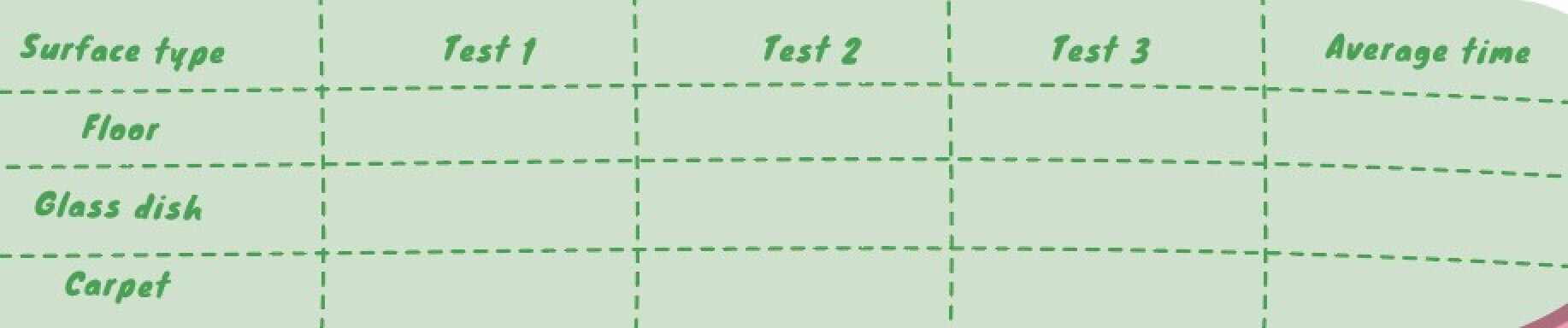
Click “end” on your stopwatch when the Beyblade stops spinning. Record the time in the table below.
-
Repeat the test two more times, and then find the average of the three trials. Do this by adding up the total spin time from the three tests. Then, divide the sum by three.
-
Test your top on the other surface types and record the results.
-
Ask yourself: which surface has the longest average spinning time? Do you know why one surface might be better than another? Which surface causes more friction?