Advertisement
Opinion
What Elon Musk and Vivek Ramaswamy can learn from China’s reformers
Deng Xiaoping and Zhu Rongji’s radical reforms resulted in a leaner government and more dynamic economy: the exact goals of the Musk-Ramaswamy plan
3-MIN READ3-MIN
7

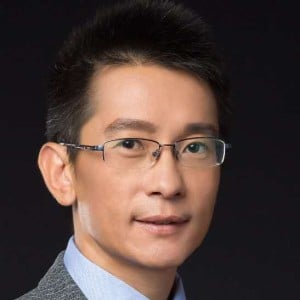
Dr Zhengxu Wang is a distinguished professor at the School of Public Affairs, Zhejiang University.
The Musk-Ramaswamy duet is gearing up for one of the most ambitious reform projects in US political history. Appointed to president-elect Donald Trump’s proposed Department of Government Efficiency, their mission is to overhaul the government, make it smaller, streamline bureaucracy and ultimately transform the way America operates. It’s a grand vision to tackle some of the country’s most entrenched problems.
There might be a lesson or two to be learned from China’s rich history of reformers. From Shang Yang (390-338BC), whose legal and economic reforms paved the way for a unified Qin dynasty, to the Song dynasty’s Wang Anshi (1021-1086), whose New Policies famously failed, and Zhang Juzheng (1525-1582), whose tax reforms, while unpopular, helped the Ming dynasty reach a peak, China’s reform tradition has been shaped by powerful ideas and institutional resistance.
More recently, under paramount leader Deng Xiaoping in the 1980s and premier Zhu Rongji in the late 1990s, China undertook two of the most significant reform movements in its modern history.
Select Voice
Select Speed
1x
AI-generated voice