Advertisement
.jpg?itok=DJ5XFWbm&v=1754450193)
Opinion
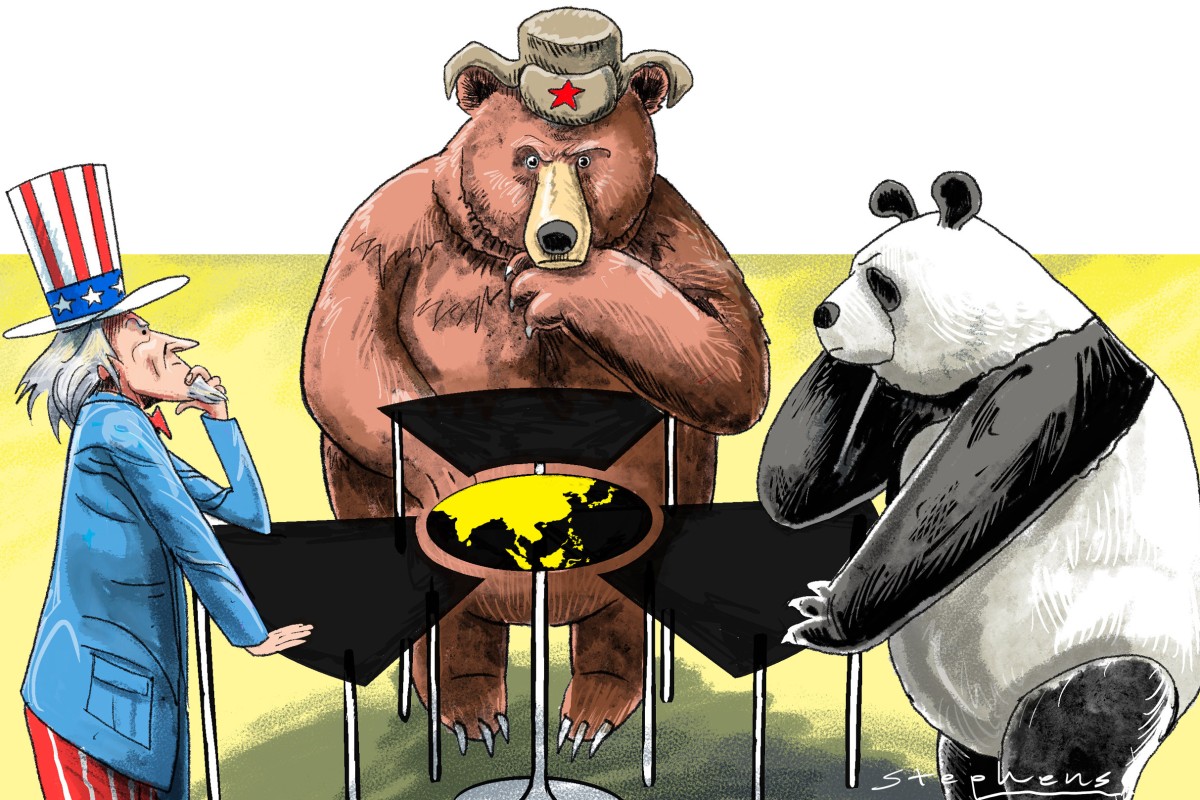
US-China tensions risk igniting nuclear arms race in East Asia
The US, China and Russia should work together to contain nuclear weapons proliferation and constrain regional deterrence efforts
3-MIN READ3-MIN
2
Hao Nan is a Susan Strange Associate Fellow with the Helsinki Geoeconomics Society, and a Nuclear Futures Fellow with Ploughshares Fund & Horizon 2045.
North Korea has disclosed its undeclared uranium enrichment sites for the first time since 2010, amid speculation that Pyongyang could have more than 60 nuclear weapons. Meanwhile, reports have emerged that the US and UK are concerned Russia might be sharing secret information and technology with Iran, potentially advancing Tehran’s ability to develop nuclear weapons.
This would align with the nature of cooperation between Iran and North Korea, possibly involving the exchange of strategic technologies. Earlier this year, US President Joe Biden recalibrated America’s nuclear strategy to focus on the supposed threat of China’s expanding nuclear arsenal. In response, China’s defence ministry dismissed the US narrative of a Chinese nuclear threat and called out Washington’s “double standard” on nuclear proliferation.
Amid a deterioration in US-China relations, the risks of a nuclear arms race in East Asia are growing alarmingly. The recent US-China diplomatic battles over nuclear arms control are a continuation of earlier unsuccessful attempts at dialogue.
Select Voice
Select Speed
1x
AI-generated voice