Evidence of earliest silkworm farming outside China found, upending Silk Road timeline
4,000-year-old cocoons found in Uzbekistan likely made their way to the region 2,000 years before the Silk Road even existed

It may not be the most majestic creature on our beautiful planet, but the humble silkworm deserves a place alongside horses, cattle, cats, and dogs due to its profound impact on human civilisation.
The luxurious fabric spun from the silkworm’s natural secretion ignited the creation of a vast global trade network, connecting Asia with the Mediterranean. This network became a catalyst for transformative exchanges of goods, ideas, and technologies across continents, significantly shaping the course of world history.
However, the history of silk predates the Silk Road, with archaeological excavations suggesting its origins lie within the Yangshao culture (5000 BC–3000 BC) during Neolithic China.
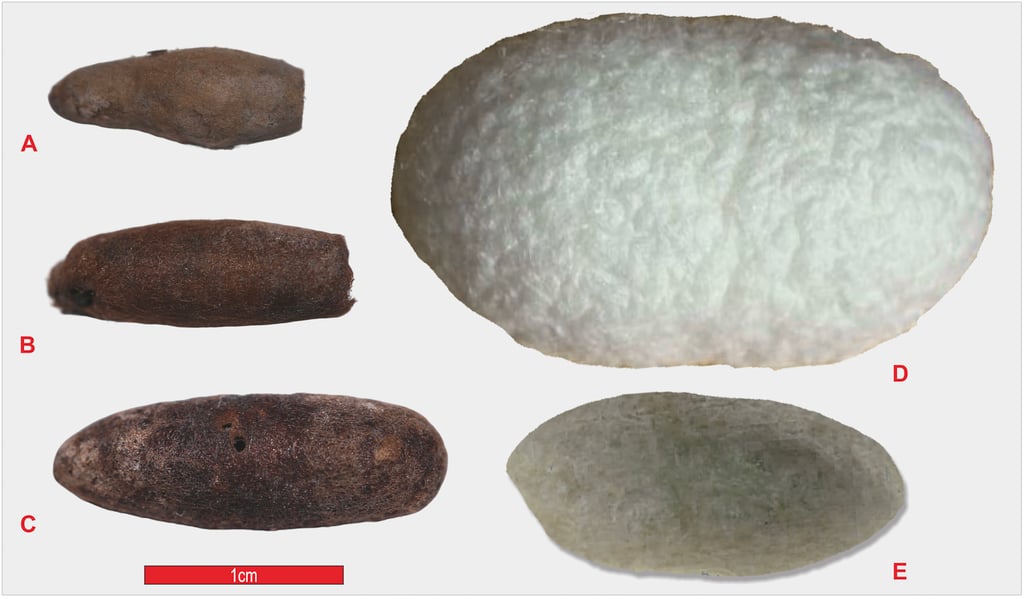
Now, a new study from Washington University in St. Louis suggests that the silkworm cocoons left China far earlier than previously thought.
The researchers, whose work was published in the peer-reviewed scientific journal Science Advances, discovered three silkworm cocoons along the Surkhan-Darya River, which flows across southeast Uzbekistan between Tajikistan and Afghanistan.