Yalta 2.0? Why Trump, Xi and Putin didn’t meet to carve up the world
The US president’s tariff war and his Ukraine policy are advancing China’s and Russia’s visions of a multipolar international order
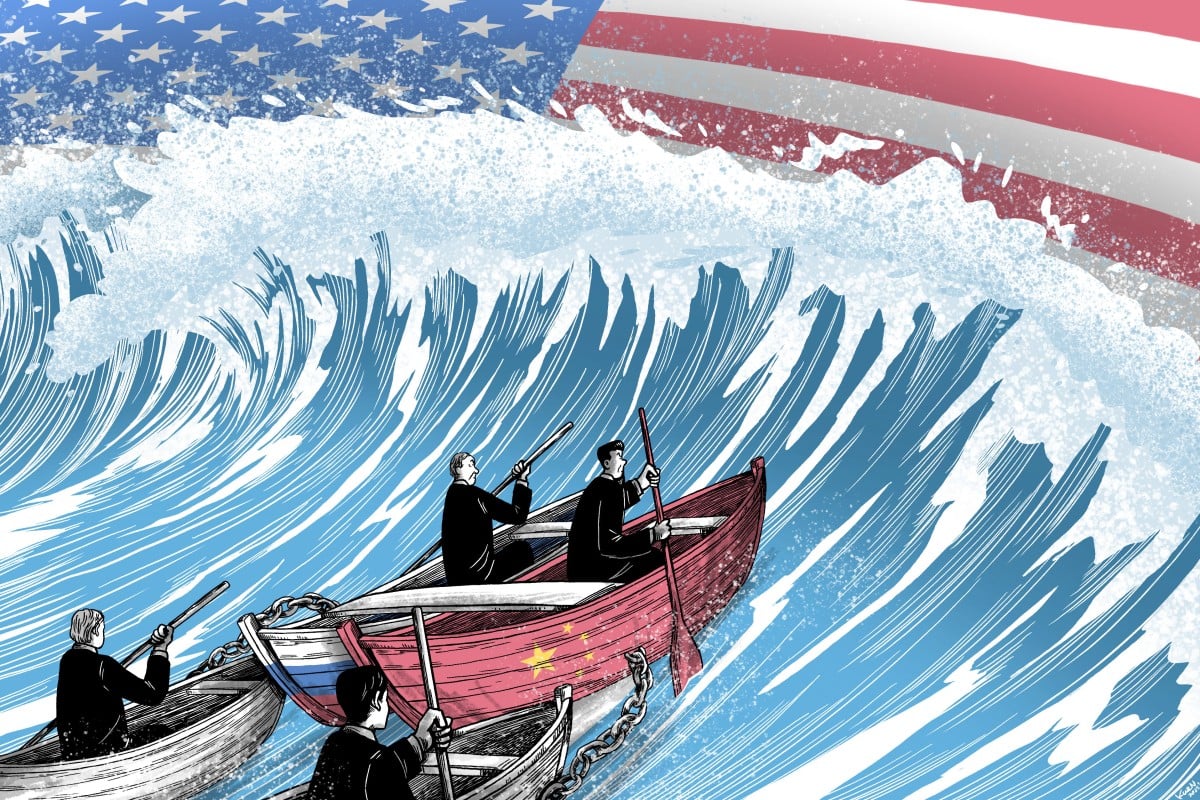
Chinese President Xi Jinping and his Russian counterpart Vladimir Putin have delivered a joint message to Donald Trump: their vision of a multipolar global order is advancing, despite what they view as persistent American hegemony and unilateralism.
Over the past few months, speculation swirled around whether the US president might join Xi and Putin for a summit to mark the 80th anniversary of the end of World War II – an echo of the Yalta Conference in 1945 – where world powers might engage in grand bargaining, or even carve out new spheres of influence.
“Yalta 2.0” did not happen this week. Xi and Putin stood shoulder to shoulder in Moscow’s Red Square, while Trump’s absence was no surprise, given Washington’s stalled negotiations over tariffs with Beijing and the Ukraine conflict with Moscow.
Trump, long enamoured with deal making and personal diplomacy, entered his second term confident he could broker agreements with Beijing and Moscow. He imposed steep tariffs on China in an attempt to force trade concessions, and used a mix of pressure and strategic concessions to keep Russia at the negotiation table.