Advertisement
Opinion
China, faced with a hostile West, should make the Global South a foreign policy priority
- In the early 1970s, Mao’s ‘three worlds’ theory guided China’s strategic alignment with the political struggles of third world nations
- As the country’s economy and influence grew, it focused on establishing ‘major power’ relationships with the West. But Beijing must now reorient itself
4-MIN READ4-MIN
6

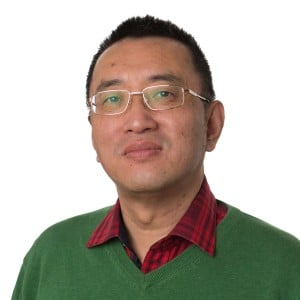
Li Xing is a Yunshan leading scholar and a distinguished professor at Guangdong University of Foreign Studies, and an adjunct professor of international relations at Aalborg University, Denmark.
In February 1974, amid the Cold War, Chinese leader Mao Zedong revealed his “three worlds” theory as part of China’s anti-hegemony diplomatic strategy.
Mao’s theory, since expanded by others, is that the first world comprised the US and Soviet Union, while the second world encompassed middle Western powers, including Japan, that were US allies – though they could also act as independent political forces on certain international issues.
That left the vast majority of developing countries and those in the non-aligned movement in the third world category. These nations were seen as the most reliable revolutionary force, capable of forming a united front against the superpowers.
Mao’s theory guided China to leverage global political mobility and manoeuvrability by aligning itself strategically with the political struggle of the third world nations. Faced with the threat of exclusion from a US-led world economy, China had to seek alternative power sources for legitimacy and survival.
Select Voice
Select Speed
1x
AI-generated voice