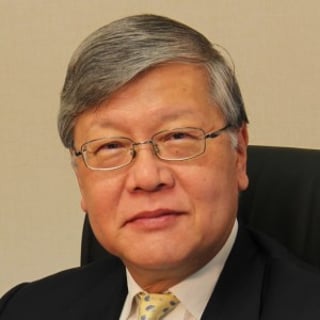
Andrew Sheng
Andrew Sheng is a former central banker and financial regulator, currently distinguished fellow at the Asia Global Institute, University of Hong Kong. He writes widely on Asian perspectives on global issues, with columns in Project Syndicate, Asia News Network and Caijing/Caixin magazines. His latest book is “Shadow Banking in China”, co-authored with Ng Chow Soon, published by Wiley.
Andrew Sheng is a former central banker and financial regulator, currently distinguished fellow at the Asia Global Institute, University of Hong Kong. He writes widely on Asian perspectives on global issues, with columns in Project Syndicate, Asia News Network and Caijing/Caixin magazines. His latest book is “Shadow Banking in China”, co-authored with Ng Chow Soon, published by Wiley.

At its core, this isn’t about Democrats vs Republicans, national power or even AI. It’s really about how each institutionalises its capital.

While local partners gain valuable technical and marketing skills, Chinese companies must navigate vastly different regulatory and cultural landscapes to succeed.

When energy, technology, money and power are linked, governments can’t escape the laws of nature.

Wishful thinking and irresponsible levels of debt are driving a global economy that looks sweet from the outside but is utterly hollow.
Advertisement

We should be asking how we can avoid conflict and work towards ending mutual threats, such as climate change and human injustice.

Coordinated action on three vulnerable frontline regions can provide a template for how policymakers can serve the people and the planet.

Every empire has its strengths and weaknesses. Perhaps the most important asset is understanding those of your adversaries.

Stock markets are booming on the assumption that US tech giants will deliver, but as liquidity becomes scarce, a reality check will ensue.

As China and the US race towards energy dominance, attention to climate resilience and resource security can ensure positive outcomes for all.

AI-driven stock market hype is not independent of what is happening in the rest of the economy.

With the UN, IMF and World Bank mired in old power structures, universities could be the platform to shape how the global future unfolds.

The countries with the best practical experience in hard development are in Asia, with much practical knowledge and experience to share.

To survive the shift from winner-takes-all capitalism to true sustainability, the learning curve is steep. AI is just the latest tool to help us climb it.

Our fate increasingly depends on the state of mind of leaders who are playing a nuclear-scale game of chicken.

Inevitably, the world will be split between those committed to peace and harmony, and those who want to fight to secure dominance.

In his address to Congress, Trump emphasised that America ‘is back’. However, the US’ financial position tells a different story, one with global implications.

Many questions about AI, from the outcome of the AI race to speculation about an AI bubble, need more time to be answered. Uncertainty is the new normal.

The world must choose between believing in the authority of central banks to decide the worth of fiat currencies or trusting in gold as a store of value.

The brutal reality is that the European Union is failing to get its squabbling nations to work as a coherent group.

Involution is a structural phenomenon with both domestic and global implications that China’s leaders are dedicated to addressing.

Whether AI delivers widespread well-being or further slavery is a political question that must be answered with sound governance.

As the Global South seeks a better development model and China looks for alternatives to mature markets, a match made out of mutual need is emerging.

Inclusive and green finance that is risk-resilient and supportive of innovation and technology must be the foundation of the new Chinese development model.

The work of one of the winners of the Nobel Prize in economics offers a way to think through the divergence between the West and the Rest.

While uncertainty is a defining characteristic of our time, there are some fundamental trends that can show a way forward.

The only certainty is more uncertainty, but money will play a critical role in the unfolding story.

Today’s surge in military spending risks crowding out resources needed to address global issues and make a better future possible.

The facade of central bank independence may be preserved, but financial markets know who’s running the show.

Countries and corporations are surely but silently working towards trade and payment diversification to minimise future disruptions.
